
Dr. Akanksha Bajpai
Radiologist
- MBBS, MD
- Ex. PGI Chandigarh
- Ex Consultant, Fortis Hospital, Mohali
Her profile supports diagnostic imaging, ultrasound, radiology and patient-focused interpretation.
Read her profile4/12, Vijayant Khand, Gomti Nagar, Lucknow Mon–Sat 9 AM–8 PM · Sun 10 AM–2 PM
Diagnostic Imaging • Gomti Nagar
A digital X-ray gives a quick picture of the chest, bones, joints or spine. The dose is small and the visit is short. You can have it at our centre in Vijayant Khand, Gomti Nagar.
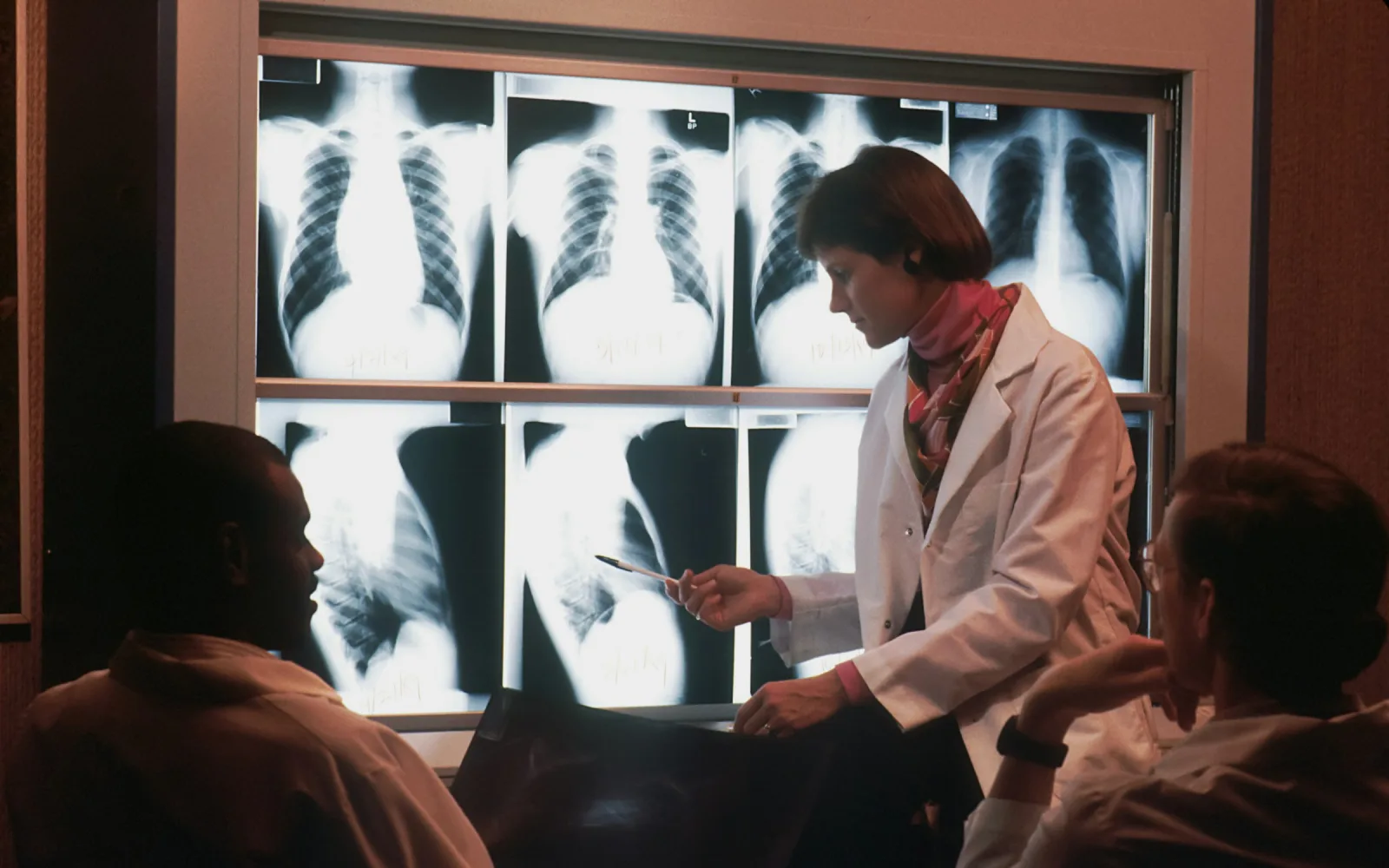
An X-ray beam passes through the body and lands on a digital detector. Dense tissue such as bone absorbs most of the beam and looks white. Air in the lungs lets it through and looks black. Muscle, fat and fluid show as shades of grey.
That is why X-ray is the usual first test for a broken bone, a dislocation, a chest infection, fluid or air around the lung, and the alignment of the spine. It also shows wear in a joint, such as a narrowed gap between two bones, and whether a fracture is healing. A hairline crack may not show on the first day, so a repeat X-ray after a week or so is sometimes advised.
X-ray shows much less of the soft tissue. A torn tendon, a strained ligament or a disc pressing on a nerve may not appear. A chest X-ray shows the outline of the heart but not its valves or how well it pumps, which is the job of a 2D Echo. For tendons and joint fluid, your doctor may suggest a joint ultrasound. We do not do MRI or CT at our centre. If your doctor wants one, ask them where to go, and our team can look at the images with you afterwards.
The prescription names the body part, and the team chooses the views. Here is what the usual complaints lead to.
If the prescription only names the body part, that is enough. If it is unclear, send it on WhatsApp and the team will confirm the views before you travel.
The dose from a routine X-ray of the chest or a limb is small, and it is one brief exposure. X-rays use ionising radiation, so one should be requested only when the answer will help your doctor decide what to do. Doctors weigh that small dose against the benefit of finding out what is wrong.
Pregnancy needs extra care. If you are pregnant or think you might be, tell the team before the X-ray is taken, not after. You and your doctor then decide whether the X-ray is needed now, can wait, or can be replaced by an ultrasound, which uses no radiation, where that can answer the same question.
Children can have X-rays when a doctor advises one. Tell the team the child's age when you book, and ask how a parent can stay close during the picture. A relative who is pregnant should not be the one to stay in the room.
These are the routine views listed for this service. If your prescription names another, message us and the team will tell you whether we do it.
Chest
PA view standing, or AP view for a patient who cannot stand.
Spine
Cervical, dorsal and lumbosacral, from the front and the side.
Shoulder, elbow, wrist and hand
Upper limb and joint views.
Hip, knee, ankle and foot
Lower limb and joint views, some taken standing.
Arm, thigh and leg
Long bones after an injury.
Skull, PNS and mastoid
Head and sinus views when prescribed.
Abdomen
Standing or lying views in selected cases.
Studies that use a contrast dye, such as barium studies, IVP or HSG, have their own preparation and booking. Send the prescription and the team will confirm the study and the date.
Send the prescription on WhatsApp or call the centre. The team confirms the views and tells you if anything special is needed.
Give the prescription and say whether you are or may be pregnant. Hand over any earlier X-rays you have brought.
You may be asked to take off jewellery, a belt, hearing aids, or clothing with metal over the area. Sometimes you wear a gown.
The team places you against the detector or on the table and moves the body part into position. You are asked to stay still. For a chest X-ray you take a deep breath and hold it for a moment.
The staff step behind a screen and take the picture. It lasts a fraction of a second and you feel nothing. Moving an injured limb into position can hurt, so say so and the team will support it.
The radiologist reports the images. The team will give you the report timing when you book. Take the images and the report to the doctor who asked for the X-ray.
Before your visit
Please bring
After your visit
Go to a hospital emergency department if you have:
Dr. Akanksha Bajpai
Radiologist
Her profile supports diagnostic imaging, ultrasound, radiology and patient-focused interpretation.
Read her profileBooking is recommended. A message or call lets the team confirm the views, tell you about any preparation, and arrange a separate slot for contrast studies. Send the prescription on WhatsApp to +91 70809 82920 or call 0522-3180995.
For most people, yes. The dose from a routine chest or limb X-ray is small, and it is given only when your doctor needs the picture. Pregnant women and children need extra care, so tell the team if you may be pregnant or if the patient is a child.
Tell the team before the picture is taken. Whether to go ahead depends on the body part, how far along you are, and how much your doctor needs the result. Sometimes an ultrasound can answer the question without radiation, or the X-ray can safely wait.
The exposure itself lasts a fraction of a second. Changing and positioning take a few minutes, and a painful injury may need a little longer. The team will tell you the report timing when you book.
Wear loose clothing with no metal zips, hooks or heavy embroidery over the area being pictured. You may still be asked to remove a belt, jewellery or hearing aids, and to change into a gown for some views.
Follow what your doctor wrote. X-ray shows bone and the space within a joint. Ultrasound shows tendons, fluid and lumps, and it needs no radiation. They answer different questions, and some people need both. Neither shows everything about a joint.
The centre is at 4/12, Vijayant Khand, near Kathauta Chauraha, Gomti Nagar, Lucknow 226010, and can be reached from Faizabad Road and Indira Nagar. Hours are Monday to Saturday 9 AM to 8 PM and Sunday 10 AM to 2 PM. Message or call first so the team can confirm the view you need.
Related services
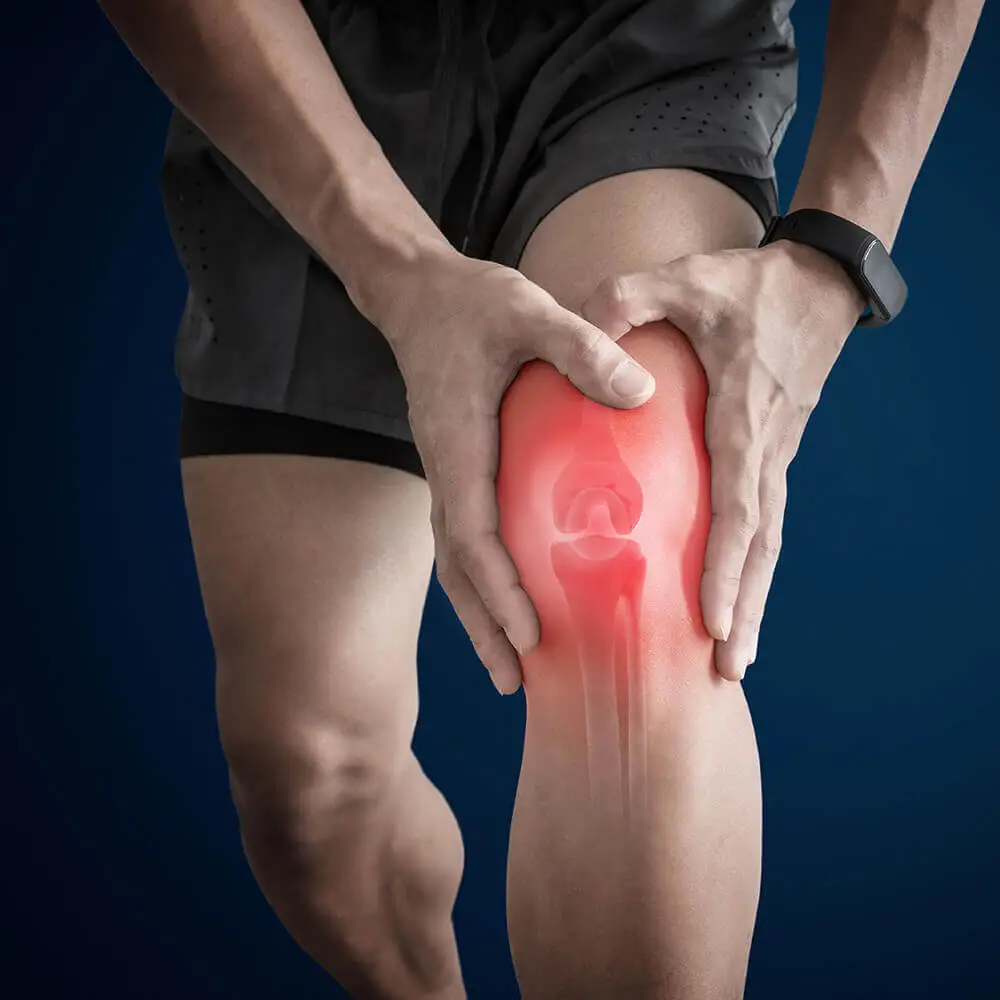
Tendons, ligaments and fluid that X-ray cannot show.
Learn more
A radiation-free scan for organs and soft tissue.
Learn more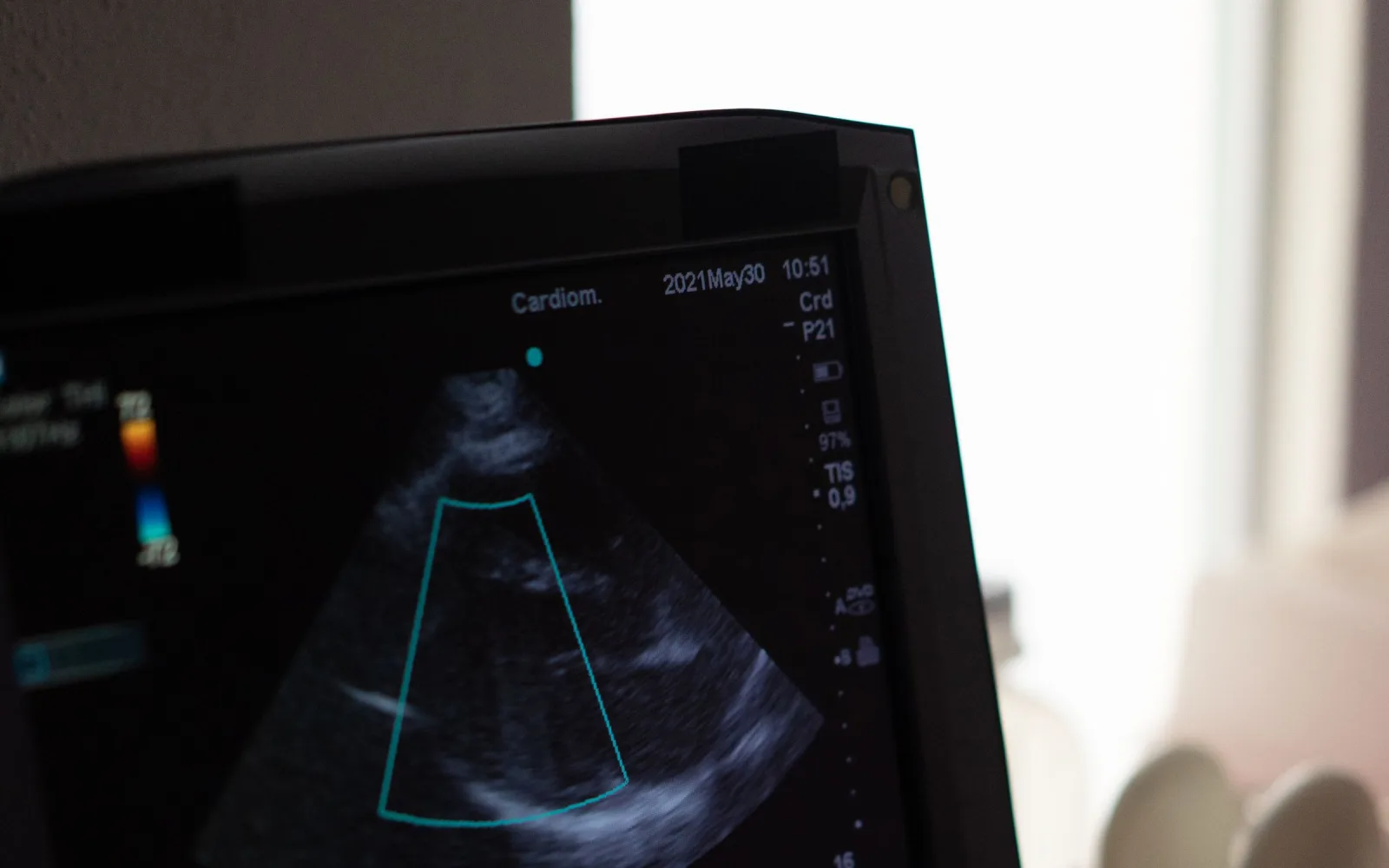
Heart pumping and valves, which a chest X-ray cannot show.
Learn more
Every imaging test we offer, in one place.
Learn moreAppointments
Message us on WhatsApp or call the centre. Tell us the test you need and your preferred day, and the team will confirm the details.
4/12, Vijayant Khand, Gomti Nagar · 0522-3180995
