Chest Fluid Sampling • Gomti Nagar
Pleural Tap (Thoracentesis) in Lucknow
A pleural tap, or thoracentesis, removes fluid from the space between the lung and the chest wall. It can ease breathlessness and lets the fluid be tested to find its cause.
- Vijayant Khand, Gomti Nagar, Lucknow
- Mon to Sat 9 AM to 8 PM, Sun 10 AM to 2 PM
- Purpose
- Easing breathlessness, testing fluid
- Guide
- Ultrasound marks the safe spot
- Position
- Sitting and leaning forward
- Afterwards
- A chest X-ray may be advised
What a pleural tap is
The lung sits inside a thin double lining called the pleura. Between the two layers is a narrow space. When fluid collects there it is called a pleural effusion. The fluid presses on the lung, so you may feel breathless, cough, or have a tight or aching chest.
Common causes include heart failure, infections such as pneumonia and tuberculosis, liver or kidney disease and cancer. A pleural tap, or thoracentesis, passes a needle through the chest wall into the space to remove fluid. It can be done for testing, for relief or for both.
Why ultrasound marks the spot
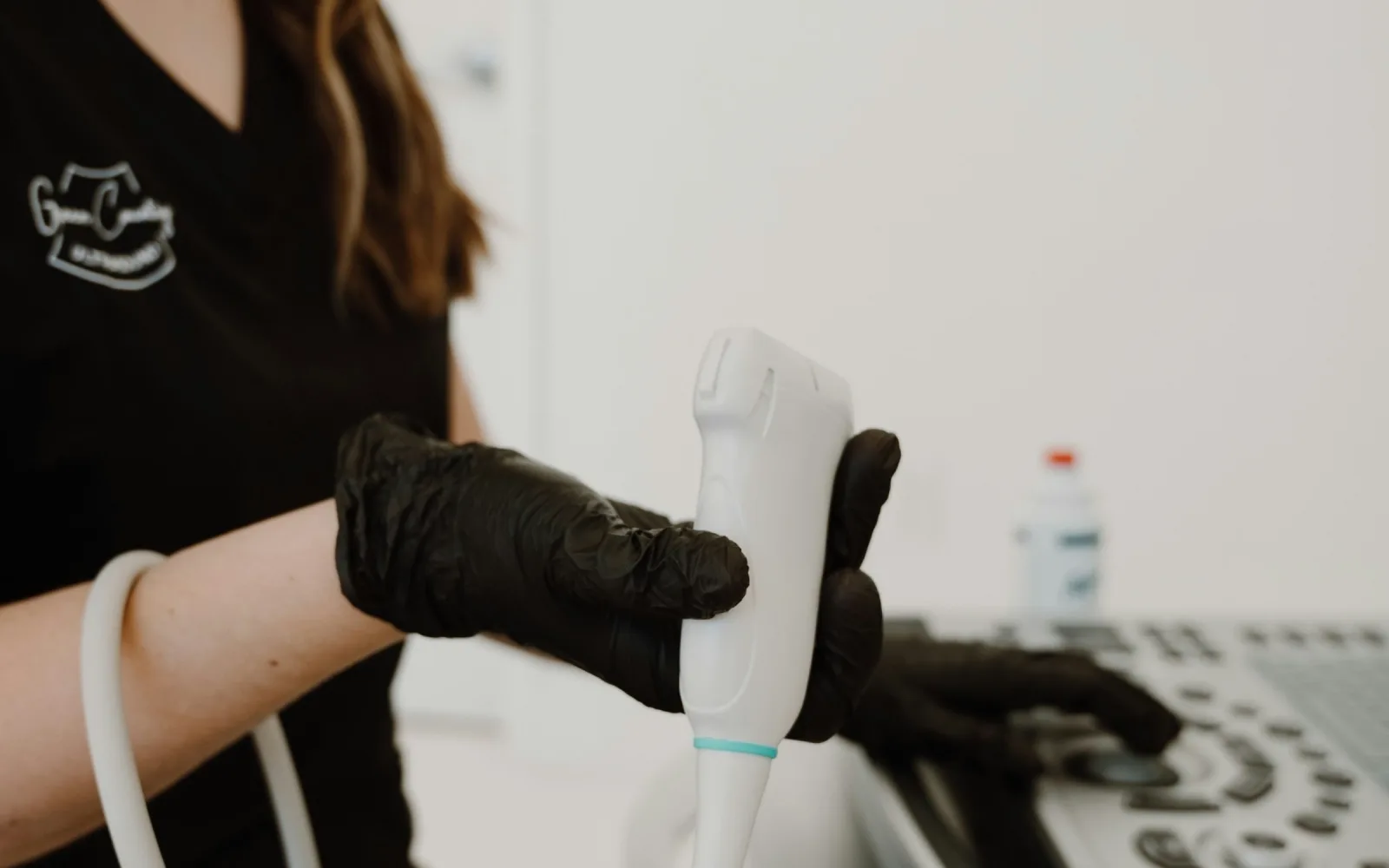
Ultrasound shows how much fluid there is, how deep it lies and where the lung, diaphragm, liver and spleen are. The radiologist marks a safe spot on your back or side, and may watch the needle as it enters. Guidance lowers the chance of puncturing the lung, compared with tapping by feel alone.
The scan also shows whether the fluid is free or divided into pockets. Pocketed fluid is harder to drain, and your doctor may need another approach.
Testing the fluid and easing breathlessness
A test sample is small. A tap for relief takes more fluid. Doctors limit how much is removed at one sitting, because taking too much too fast can cause coughing, chest tightness and, rarely, fluid in the lung. The team stops if you cough a lot or feel unwell.
Many people breathe more easily as the fluid drains, but not all breathlessness comes from fluid, and relief can be partial. The tap does not treat the cause. If the fluid returns, your doctor may advise treating the cause or draining it a different way.
The tests depend on your doctor's question. Common ones are:
- Protein and other chemistry, to tell the type of fluid.
- Cell count and culture, to look for infection.
- Cytology, where a pathologist looks for abnormal cells.
- Tests for tuberculosis, where it is suspected.
The report goes to the doctor who referred you. The team will tell you when to expect it. Blood tests that go with the fluid tests can be done at our pathology lab.
Risks and limits
Serious problems after a pleural tap are uncommon. The main risks are:
- Pneumothorax: air enters the space and part of the lung collapses. This is the main risk. A small air leak often settles on its own, but a larger one needs a tube. Say at once if you become more breathless.
- Bleeding in the chest wall, usually small.
- Infection at the needle site or in the fluid.
- Faintness or a fall in blood pressure, and a cough as the lung expands.
- Pain at the site, or at the tip of the shoulder.
Doctors take extra care if you take blood thinners or have low platelets or a clotting problem. The team checks your reports before the day.
The chest X-ray after the tap
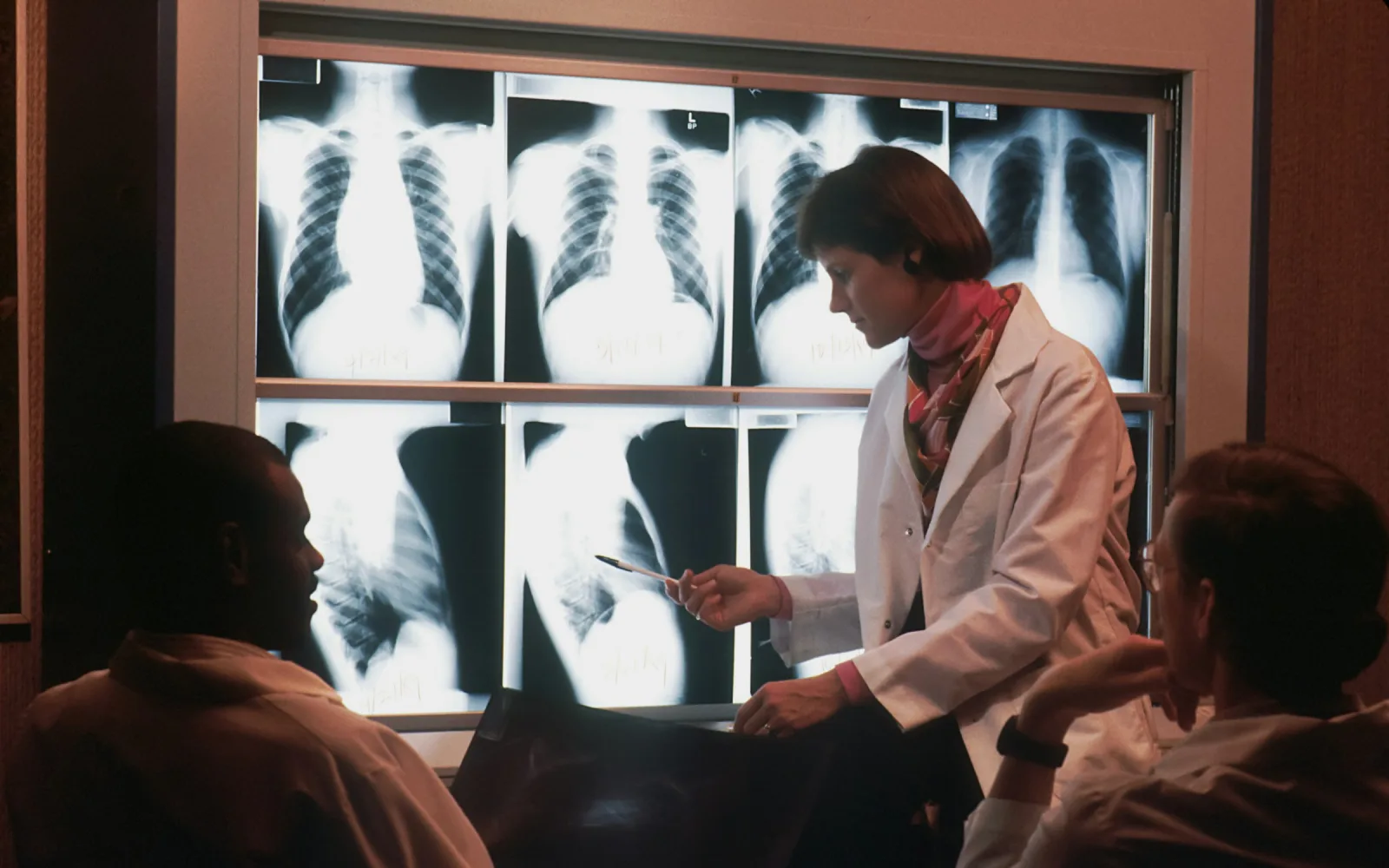
A chest X-ray may be advised afterwards. It is more likely if you are breathless or coughing, if air was drawn back into the syringe, or if a large amount of fluid was drained. It checks for a collapsed lung and shows how much fluid remains. A routine chest X-ray uses a small dose of radiation, so tell the staff if there is any chance you are pregnant.
Not everyone needs one. After an uncomplicated ultrasound-guided tap in a person with no symptoms, doctors may decide to skip it. Your doctor or the team decides.
What happens during the tap
-
1
Review
The team reads your referral, chest X-ray and any scans, and your blood tests. It confirms why the tap is needed and where it will be done.
-
2
Positioning
You sit upright on a chair or the edge of a couch and lean forward, resting your arms and head on a pillow or table. This opens the spaces between the ribs.
-
3
Scan and marking
Ultrasound shows the fluid. The radiologist marks the spot and cleans the skin.
-
4
Numbing and needle
The skin and the tissue down to the lining are numbed. The needle goes in just above a rib. You feel pressure. Stay still, and tell the team if you need to cough.
-
5
Draining
Fluid is drawn into a syringe, or drains through a thin tube into a bottle. The team watches how you feel and may stop early.
-
6
Afterwards
A dressing goes on. You rest and are observed. A chest X-ray is done if advised, and the samples go to the laboratory.
Preparation and aftercare
Before your visit
- Eat and drink normally unless the team says otherwise.
- Bring your recent chest X-ray, scans and reports.
- Tell the team about allergies and any breathing medicines or inhalers. Tell your doctor too if you take a blood thinner, and do not stop any prescribed medicine yourself.
- Wear a loose, front-opening top.
- Come with a relative or friend who can see you home.
- If you are breathless at rest, or getting worse quickly, do not wait for a booking. Go to the nearest emergency department.
Please bring
- Your doctor's prescription or referral
- Chest X-ray, with its report
- Other scan reports
- Blood test reports
- Your inhalers and a list of your medicines
After your visit
- Take the rest of the day easy, and avoid heavy exertion until the team says you can.
- A mild cough or a slight ache at the site can last a short while.
- Keep the dressing dry for as long as you were told.
- If a chest X-ray was advised, do not skip it.
- Ask the doctor who ordered the fluid tests to explain the report.
When to get urgent help after a pleural tap
Go to the nearest emergency department at once if breathing gets worse or the symptoms are severe. Contact your doctor or the centre the same day if you notice:
- Breathlessness that is new or getting worse.
- Sharp chest pain, especially pain that is worse when you breathe in.
- A cough that will not stop, or frothy or pink phlegm.
- Dizziness, fainting, cold sweats or a racing heart.
- Bleeding, or fast swelling, around the needle site.
- Fever, or redness and pus at the site, in the days that follow.
Pleural Tap: common questions
What is the difference between a pleural tap and thoracentesis?
They are the same procedure. Thoracentesis is the medical name and pleural tap is the common one. You may also hear it called a chest tap or pleural fluid aspiration. In every case a needle removes fluid from the space around the lung.
Will a pleural tap relieve my breathlessness?
Many people feel easier once fluid is drained, but how much depends on the cause and on how much fluid is removed. Breathlessness can have other causes too. The tap does not treat the cause, so your doctor plans that treatment alongside.
Does a pleural tap hurt?
You feel a sting when the skin is numbed, then pressure between the ribs. A tickle or an urge to cough is common as the lung re-expands. Tell the team if you feel sharp pain or become more breathless, and they will pause.
Is a chest X-ray always needed afterwards?
No. Your doctor may advise one if you are breathless or coughing after the tap, if air was drawn back, or if a lot of fluid was removed. After an uncomplicated ultrasound-guided tap it is sometimes skipped. The team tells you what applies to you.
Is a pleural tap the same as a chest drain?
No. A tap removes fluid through a needle or thin tube that comes out again at the end. A chest drain is a tube left in the chest for hours or days, which doctors choose when fluid is thick, infected or keeps returning. Your doctor decides which suits your fluid.
Can the fluid come back after a pleural tap?
Yes, if the cause continues, and the breathlessness then returns too. How soon depends on the cause. If fluid keeps coming back, your doctor may treat the cause more directly or choose a drain left in for a time.
Do I need to stay in hospital after a pleural tap?
It depends on how much was drained and how you are breathing afterwards. A short rest and a check of your breathing is sometimes enough. If you are very breathless, a large amount came out or air has entered the chest, longer observation or admission may be advised. The team explains what applies to you once your papers are reviewed.
Where can I get a pleural tap near Gomti Nagar?
Message the centre at 4/12, Vijayant Khand, near Kathauta Chauraha, Gomti Nagar, on WhatsApp at +91 70809 82920 with your prescription and chest X-ray. The team confirms whether the tap is done at the centre or elsewhere. Fluid in the abdomen has its own page, ascitic tap.
Related services
Tests and care that often go together
Appointments
Ask about Pleural Tap in Gomti Nagar, Lucknow
Send your prescription and any earlier reports on WhatsApp or call the centre. The team reviews them and tells you the next step.
4/12, Vijayant Khand, Gomti Nagar · 0522-3180995
