Interventional Radiology • Gomti Nagar
Diabetic Foot Angioplasty in Lucknow
In diabetes, narrowed leg arteries can stop a foot wound from healing. Balloon angioplasty opens the narrowing, and it is always one part of a wider plan agreed with your treating doctor.
- Vijayant Khand, Gomti Nagar, Lucknow
- Mon to Sat 9 AM to 8 PM, Sun 10 AM to 2 PM
- Assessment
- Doppler scan, then angiogram
- Treatment
- Balloon opening of narrowed arteries
- Decision
- A team plan with your own doctor
- Where done
- Confirmed after case review
Why diabetes narrows the arteries of the leg and foot
Years of high blood sugar damage the lining of the arteries, and fatty plaque and calcium build up inside them. In diabetes the narrowing often affects the long, thin arteries below the knee, which leaves the foot short of blood. Doctors call this peripheral arterial disease.
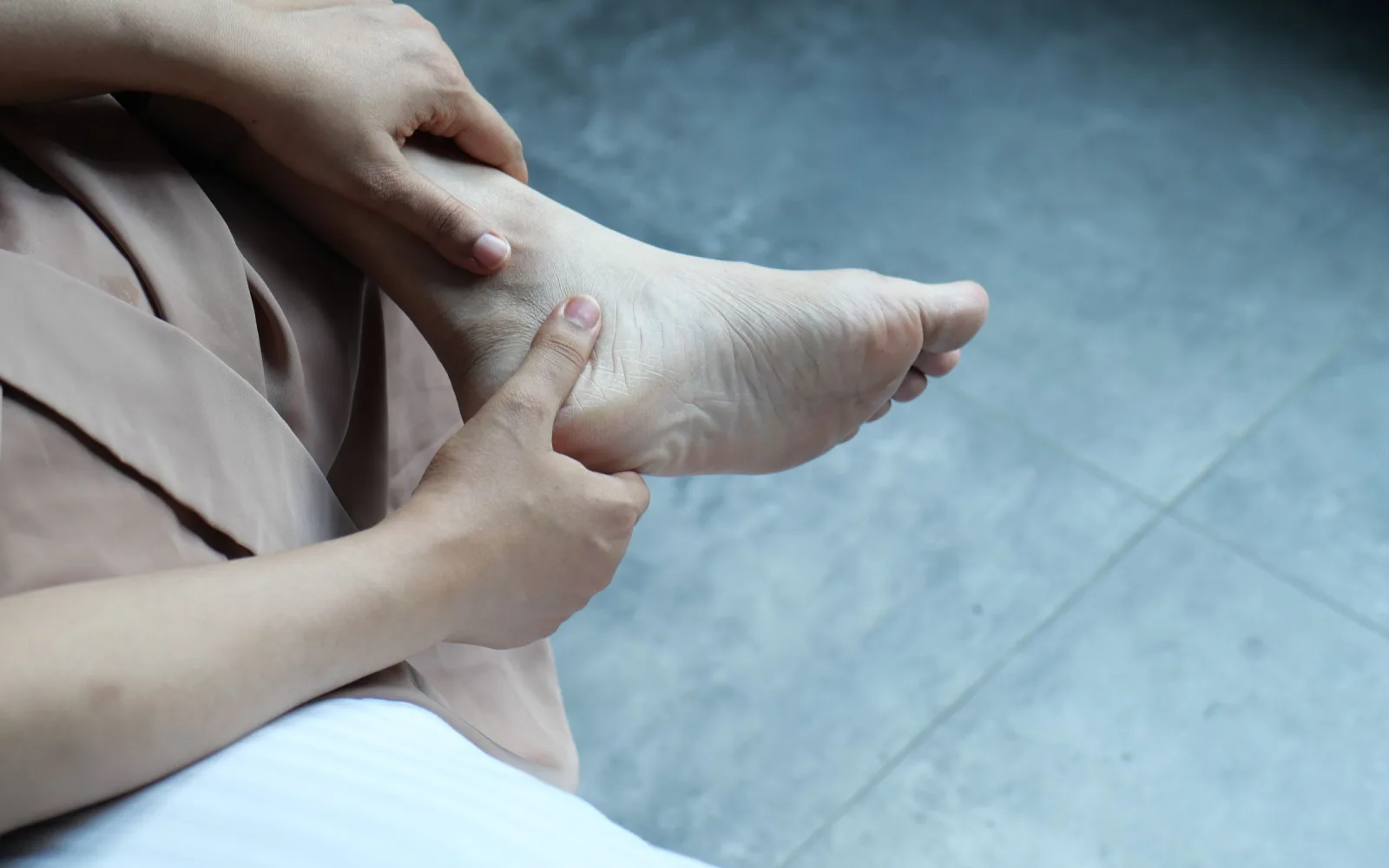
Diabetes also damages the nerves of the foot, a problem called neuropathy. Cuts, blisters and pressure sores can then go unnoticed. A wound with a poor blood supply heals slowly or not at all, and infection can take hold. Smoking, raised blood pressure and high cholesterol make the artery problem worse.
- A wound or ulcer on the toe, heel or foot that is not healing after a few weeks of proper care.
- Pain in the calf on walking that eases when you stop.
- Pain in the foot at night, eased by hanging the leg over the edge of the bed.
- A cold, pale or bluish foot, shiny skin or loss of hair on the toes.
- A toe turning dark.
Neuropathy can hide pain, so the absence of pain does not mean the foot is safe. Show any foot sore to a doctor early.
How the arteries are assessed
Assessment begins with a foot examination, a check of the pulses and your sugar and kidney reports. The next step is usually a Colour Doppler scan of the leg arteries, which shows where flow is reduced and how severe the narrowing is.
The treating team may add ankle and toe blood pressure readings. In diabetes, stiff calcified arteries can make an ankle reading look falsely normal, so doctors rely on several tests together.
If a procedure is being considered, an angiogram gives the map. It is a set of pictures taken while contrast dye, a liquid that shows up on imaging, runs through the arteries. It may be done as a CT angiogram or as a catheter angiogram, which can be followed straight away by treatment. We do not have a CT or MRI scanner, so if your doctor wants one, they will advise where to have it done, and we can review the images.
What balloon angioplasty involves
Angioplasty opens a narrowed artery by inflating a small balloon inside it. The skin is numbed, and a thin needle enters an artery, often in the groin and sometimes at the ankle or foot. A fine wire is passed across the narrowing under live imaging, and a balloon follows on the wire.
The balloon is inflated for a short time to press the plaque against the artery wall, and then it is removed. Sometimes a small mesh tube, called a stent, or a drug-coated balloon is used to help keep the artery open. A final dye picture shows whether blood now flows down to the foot. The team carrying out the procedure explains beforehand whether you will be numbed only or lightly sedated as well.
Why this is always a team decision
Angioplasty restores blood flow, but the wound still needs its own treatment. Opening an artery does not clear an infection, take pressure off the sole or lower your blood sugar. Those depend on the wound care, antibiotics, footwear and diabetes plan that go alongside.
Your diabetes doctor, a vascular or foot surgeon, the wound-care team and the radiologist each see a different part of the problem. They weigh angioplasty against bypass surgery, against medicines and wound care alone, and against removing dead tissue. In some feet the tissue cannot be saved, and the team will explain that plainly if it applies.
We review your referral, scans and reports first. Whether the angioplasty is carried out at our centre or elsewhere, and by which doctor, is confirmed only after that review, together with your own treating team.
Benefits, limits and risks of angioplasty
When the arteries open, more blood reaches the foot and a wound has a better chance of healing. It is not a cure for diabetes or for the artery disease, and the narrowing can return, so follow-up scans are usually needed.
Each of these is discussed with you before you consent.
- Bleeding, bruising or a swelling called a pseudoaneurysm where the needle entered the artery.
- A tear in the artery wall, or a small piece of plaque or clot travelling down to the foot.
- Allergy to the contrast dye, and extra strain on the kidneys. People with diabetes are more prone to the kidney strain, so kidney function is checked first.
- The artery narrowing again, or a stent blocking, which may need another procedure.
- Infection at the puncture site, or no improvement in the wound despite a technically good result.
- In some people the foot cannot be saved even after the artery has been opened.
From assessment to follow-up
-
1
Share your records
Send the prescription, photographs of the wound if you have them, sugar and kidney reports and any earlier leg scans.
-
2
Doppler scan of the leg arteries
The radiologist maps the blood flow in the arteries of the leg and foot. You lie on a couch, and both legs may need checking.
-
3
Team review
We go through the findings with your referral and confirm whether an angiogram and angioplasty are advisable and where they would be done.
-
4
Angiogram and angioplasty
If you go ahead, the team carrying out the procedure maps the arteries with dye and opens the narrowing with a balloon, in the same sitting where possible.
-
5
Wound care and follow-up
You return to your diabetes and wound-care team. A repeat Doppler scan is often planned to check that the artery has stayed open.
Preparation and aftercare
Before your visit
- For the Doppler scan, eat and drink normally and wear clothes that let you uncover both legs.
- Do not stop any prescribed medicine unless your doctor tells you to. Before an angiogram, ask the procedure team how to handle metformin, insulin and blood thinners.
- Keep the wound dressed as your wound-care team has advised, and tell the scan team if the wound looks worse.
- Share recent HbA1c, kidney function and blood count reports. If new blood tests are asked for, our pathology lab can do them.
- Tell the team about any allergy to contrast dye or iodine.
Please bring
- Referral or discharge summary from your doctor
- Earlier Doppler, angiogram or X-ray reports
- Latest HbA1c and kidney function reports
- A list of medicines, including insulin doses
- Photographs of the wound, if you have taken any
After your visit
- Rest as advised on the day. Walking is encouraged afterwards, unless the wound needs pressure taken off it.
- Keep the puncture site clean and dry, and follow the team's instructions on dressings.
- Wear the footwear or offloading device that your foot team recommends.
- Keep all wound-care and diabetes appointments. Angioplasty is only one part of treatment.
- Attend the follow-up Doppler scans you are given.
Why foot care and blood sugar control matter
Good foot care and steady blood sugar protect the result of angioplasty. High sugar slows healing and weakens the body's defence against infection, so keep to the diet, medicines and checks your diabetes doctor has set. Tests such as HbA1c, kidney function and cholesterol, which are part of our diabetic package, help the team plan.
- Look at both feet every day, including the soles and between the toes. Use a mirror or ask someone to help.
- Wash with lukewarm water, dry well between the toes, and moisturise dry heels but not the gaps between the toes.
- Never walk barefoot, even indoors. Wear well-fitting shoes and check inside them for stones or rough seams before putting them on.
- Do not cut corns or calluses yourself, and do not put hot water bottles or heating pads on your feet.
- Stop smoking if you smoke, and take the antiplatelet, cholesterol and blood pressure medicines that your doctor has prescribed.
When a foot problem cannot wait
Go to an emergency department, or contact your treating team the same day, if you notice any of these.
- A sudden cold, pale, numb or very painful foot or leg.
- A toe or part of the foot turning dark or black.
- A wound with pus, a bad smell, spreading redness, or fever and chills.
- Bleeding, or a fast-growing, throbbing lump, at the groin or ankle puncture site after the procedure.
- Blood sugar that stays very high, with thirst, vomiting or drowsiness.
Diabetic Foot Angioplasty: common questions
Can angioplasty heal a diabetic foot ulcer?
It can improve the blood supply that healing needs, but it does not heal the wound by itself. The ulcer still needs cleaning, dressings, pressure relief and treatment of any infection, and your sugar must be controlled. The result varies from person to person and cannot be promised.
How do I know my foot ulcer is not healing because of poor blood flow?
A doctor checks pulses, skin colour and temperature, and usually arranges a Doppler scan of the leg arteries. Ulcers on the toes or heel, pain at night, a cold foot or no healing after weeks of proper care all point to poor flow. Vein problems, infection and pressure on the foot can also slow healing; see varicose vein treatment for the venous side.
Is angioplasty better than bypass surgery?
Neither is better for every patient. Angioplasty uses a needle puncture and a balloon, and suits many shorter narrowings. Bypass surgery uses a graft and may suit long blockages or people fit for an operation. The vascular surgeon, diabetes doctor and radiologist decide together after seeing the angiogram.
Do I need a stent?
Not always. Many narrowed leg arteries are treated with a balloon alone, and a stent or a drug-coated balloon is used only where the team thinks the artery needs extra support. This is decided during the procedure, from what the pictures show.
Will the arteries narrow again?
They can. Diabetes continues to affect the arteries, and a treated segment may narrow again over months. That is why follow-up Doppler scans, good sugar control, stopping smoking and the medicines your doctor prescribes matter. Repeat treatment is sometimes needed.
Can kidney disease stop me from having an angiogram?
Not always, but the dye can strain weak kidneys. The team checks your kidney function first, using tests like those in a kidney panel, and may change the plan. Tell the team if you have kidney disease or take metformin. Do not stop any medicine unless your doctor tells you to.
What foot care should I follow every day?
Check both feet daily, wash and dry them well between the toes, moisturise dry skin, wear well-fitting footwear and never walk barefoot. Trim nails straight across, and do not cut corns yourself. Report any blister, cut or colour change at once, even if it does not hurt.
Where can I get diabetic foot angioplasty in Lucknow?
We assess the leg arteries with Colour Doppler at our centre in Gomti Nagar and review your referral and reports. Whether the angioplasty is then done at our centre or elsewhere, and by whom, is confirmed after that review, together with your treating doctor. See the interventional radiology page for related procedures.
Related services
Tests and care that often go together
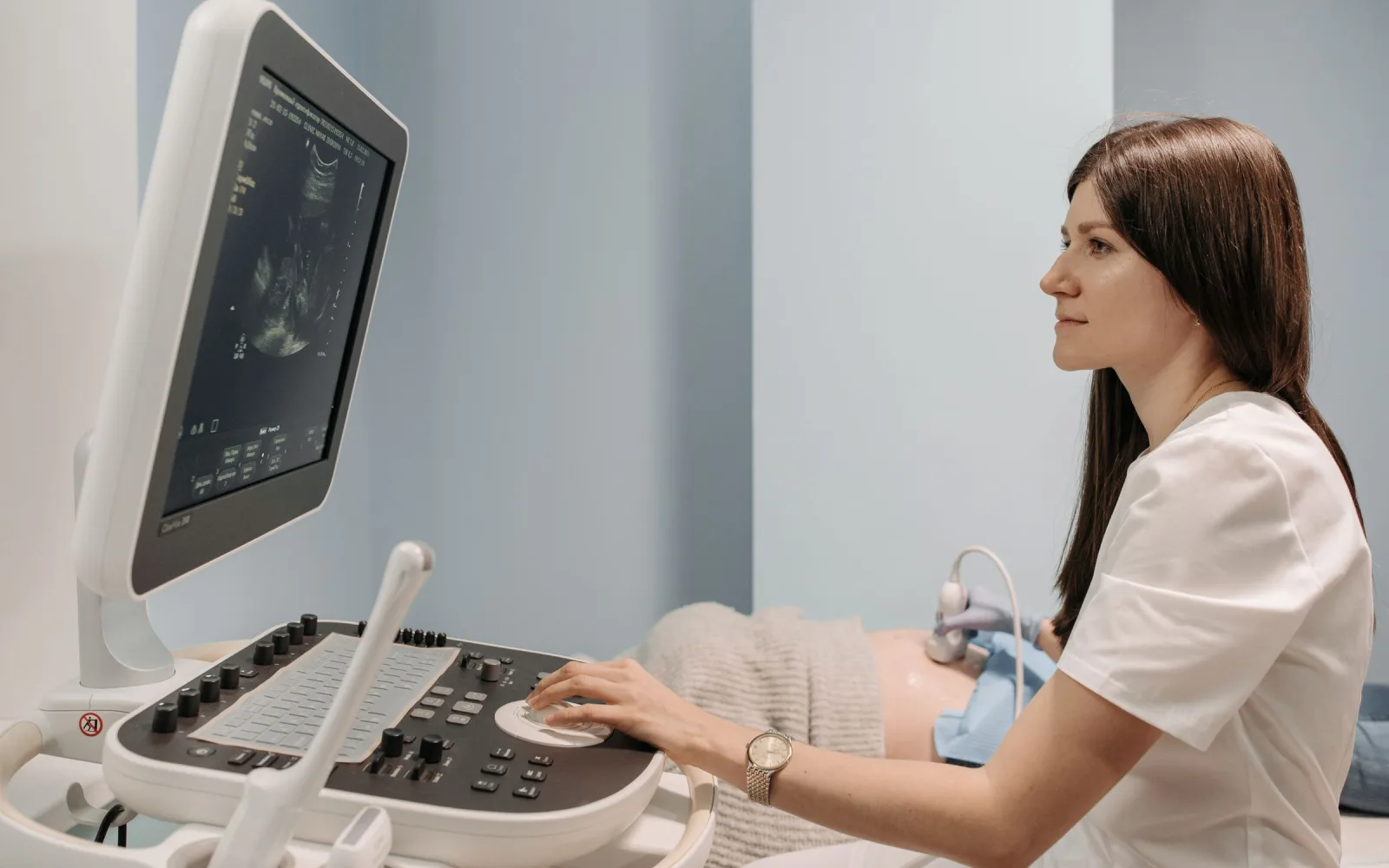
Colour Doppler
Maps blood flow in the leg arteries.
Learn more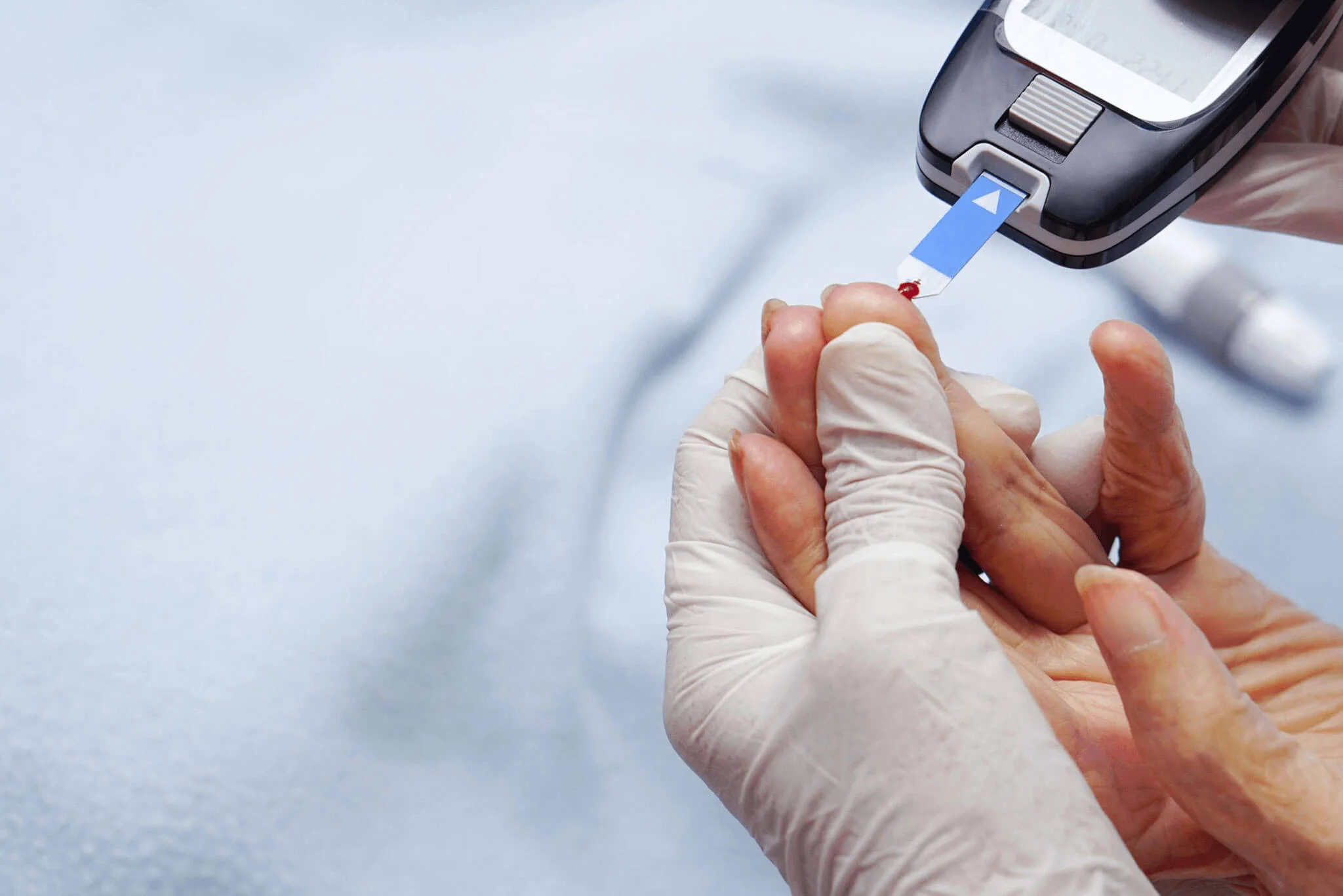
Diabetes Health Package
Sugar, kidney and cholesterol checks.
Learn more
Varicose Vein Treatment
For leg problems caused by veins.
Learn more
Interventional Radiology
Image-guided sampling, drainage, vessel and ablation procedures, planned after a specialist review.
Learn moreAppointments
Ask about Diabetic Foot Angioplasty in Gomti Nagar, Lucknow
Send your prescription and any earlier reports on WhatsApp or call the centre. The team reviews them and tells you the next step.
4/12, Vijayant Khand, Gomti Nagar · 0522-3180995
