Interventional Radiology • Gomti Nagar
PICC Line Placement in Lucknow
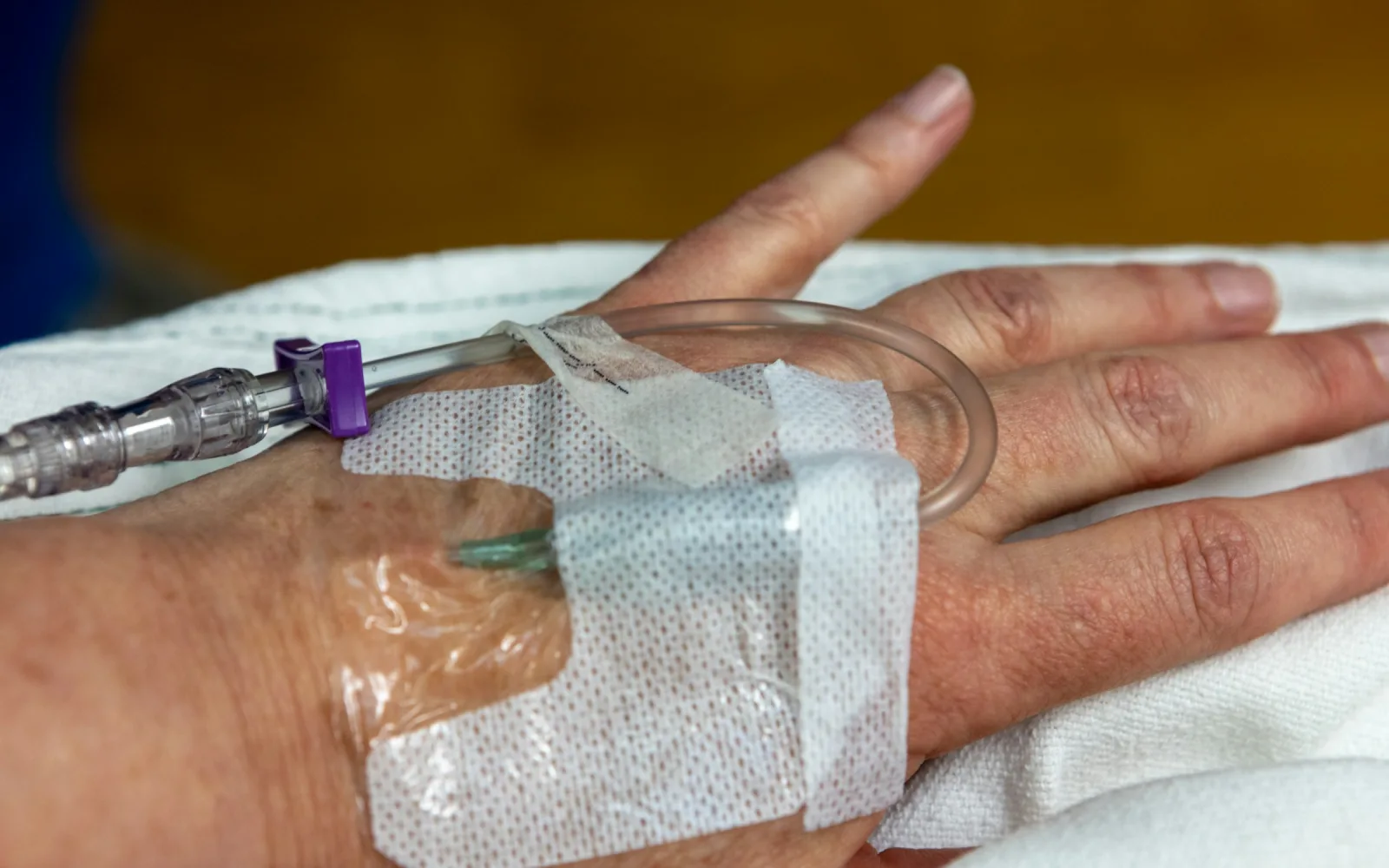
A PICC line is a long, thin tube placed in an arm vein so that medicines reach a large vein near the heart over weeks or months, without a new needle stick every time.
- Vijayant Khand, Gomti Nagar, Lucknow
- Mon to Sat 9 AM to 8 PM, Sun 10 AM to 2 PM
- Used for
- Chemotherapy, long antibiotics
- Site
- Upper arm vein, tip near the heart
- Guided by
- Ultrasound, then a tip-position check
- Where done
- Confirmed after case review
What is a PICC line?
A PICC, short for peripherally inserted central catheter, is a long, thin, soft tube. It goes in through a vein of the upper arm and is passed along the vein until its tip lies in a large vein close to the heart. The other end stays outside the arm, usually with one or two small caps.
Strong medicines, including many chemotherapy drugs, can irritate the small veins of the arm. In a large central vein they are diluted quickly. The same line can be used for weeks or months, so you are spared a needle each time.
When a PICC line is used
A PICC line is used when treatment needs reliable access to a central vein for weeks or months. Doctors may advise it for the following.
- Chemotherapy, especially cycles that run over several months.
- Long courses of intravenous antibiotics, for example for a bone or deep-seated infection.
- Intravenous feeding or other drugs that irritate small veins.
- People whose arm veins are hard to find and who need weeks of intravenous treatment.
It is not the right line for everyone. A short course can be given through an ordinary cannula or a midline catheter. Treatment lasting many months or years may suit an implanted port or a tunnelled central line better. Your treating doctor makes that choice.
How a PICC line is placed
Placement is done under ultrasound guidance, with local anaesthetic to numb the skin of the upper arm. A band is tied around the arm and ultrasound is used to pick a suitable vein. The vein is entered with a small needle, a guide wire goes in, and the line follows it.
The tip position is checked, either on an X-ray or by another tip-guidance method, before the line is used. A stitch or a special sticker holds the line in place, and a clear dressing covers the site. The team carrying out the procedure explains the exact steps, since methods differ from place to place.
How to look after a PICC line
A PICC line stays safe when it is kept clean, dry and untouched except by trained people.
- Dressing: keep it dry and stuck down. A nurse changes it on a regular schedule, often once a week, and at once if it gets wet, dirty or loose.
- Flushing: the line is flushed with saline, and sometimes a lock solution, as instructed, so that it does not clot. Do not flush it yourself unless you have been taught.
- Washing: cover the arm with a waterproof sleeve or plastic cover. Do not swim or soak the arm.
- The arm: use it for normal daily tasks. Avoid heavy lifting, pulling and strenuous exercise as advised, and do not wear tight sleeves over the line.
- Cuffs and needles: no blood pressure cuff, injections or blood draws on that arm unless the treating team says it is fine.
- Hands: wash them before touching near the site, and keep children and pets from tugging at it.
Look at the site and arm every day. If more of the tube is showing than when it was placed, it may have slipped.
Risks and limits of a PICC line
A PICC line spares you repeated needle sticks, but like any line it carries risks. It gives access for treatment and does not treat the illness itself.
- Infection of the exit site or the bloodstream, the most important risk. The warning signs are listed below.
- A clot in the arm vein around the line, which shows as swelling, pain or heaviness in the arm.
- A blocked line that cannot be flushed or drawn from.
- A slipped line, or a tip that has moved from its position.
- Bruising, bleeding or pain at the site, and sometimes irritation of the vein.
- Rarely, puncture of a nearby artery or nerve, a disturbance of the heart rhythm during insertion, or air entering the line.
A PICC line may not suit you if you have kidney disease that could need dialysis, because arm veins may be needed for a fistula. It may also be avoided if there is an infection or clot in that arm. After breast surgery with lymph node removal, the arm on the operated side is usually avoided. The team asks about all of these.
From the request to the first use
-
1
The request
Your doctor advises a PICC line and tells us the treatment, how long it will run and when it starts.
-
2
Review and vein check
The team goes through the papers and, if useful, checks the arm veins with ultrasound. We confirm whether to go ahead, and where.
-
3
Preparation
Consent is signed and recent blood counts and clotting are checked where needed. You are told about food and medicines for the day.
-
4
Placement
The arm is cleaned, numbed and covered with a sterile sheet. The line is guided into the vein and its tip is checked.
-
5
Handover
The line is dressed, and the nurse or doctor who will use it is told how to flush and care for it.
Preparation and aftercare
Before your visit
- Tell the team about blood thinners, allergies, any earlier clot, a pacemaker or other chest device, and previous breast surgery or radiotherapy.
- Do not stop prescribed medicines unless your doctor tells you to. Blood thinners are adjusted only on medical advice.
- Eat normally unless the team tells you to fast.
- Wear a loose or short-sleeved top.
- Bring recent blood counts. Our pathology lab can repeat them if the team asks.
Please bring
- Your doctor's request with the treatment plan
- Recent blood count and clotting reports
- Earlier scans of the arm veins, if any
- A list of your medicines and allergies
After your visit
- Mild soreness in the upper arm for a day or two is common. Use only the pain relief your doctor has advised.
- Leave the clear dressing alone, and call the treating team if it lifts, gets wet or looks dirty.
- Check the site daily, and note whether the length of tube outside the arm has changed.
- Carry a note saying that you have a PICC line, and tell every doctor or nurse who treats you.
- Ask the treating team how often the line will be flushed and when it will be taken out.
Who is suitable, and where a PICC line is placed
Suitability depends on the treatment prescribed, the condition of your arm veins and your general health. A fever, an infection in the blood or a clot in the arm vein may mean the line has to wait. The doctor who treats you, such as an oncologist, physician or infection specialist, makes the request.
We review the request, your reports and any vein findings first. An arm vein ultrasound or Colour Doppler scan can show whether the veins are suitable and open, and the team confirms the exact scan when you book. After that review the team tells you whether the PICC line is placed at our centre or elsewhere, and who will do it. That is not decided in advance.
Warning signs with a PICC line
Do not wait for the next appointment. Call the treating team the same day, or go to an emergency department, if any of these happen.
- Fever, or shivering that starts after the line has been flushed or used for a drip.
- Redness, warmth, pain, swelling or pus where the line enters the skin.
- Swelling, pain, heaviness or a change in colour of the arm, hand or fingers, or swelling of the neck or face.
- The line has moved: more tube is showing than before, or it has come out. Press on the site with clean gauze and get help.
- Leaking from the line, a crack, a wet dressing, or a line that will not flush.
- Sudden breathlessness or chest pain. Go to an emergency department at once.
PICC Line Placement: common questions
How long can a PICC line stay in?
A PICC line is usually kept for weeks to a few months, for as long as the treatment needs it and the site stays healthy. Some stay longer under careful review. The treating team decides when to remove it, and removal is done by a trained person.
Is a PICC line the same as a port or a Permacath?
No. A PICC line leaves the skin of the upper arm and can be seen. A port sits entirely under the chest skin and is reached through the skin with a special needle, which suits months or years of treatment. A Permacath is the tunnelled catheter used for dialysis. Your doctor chooses by the type and length of treatment.
Does PICC line placement hurt?
The skin is numbed with local anaesthetic, so you may feel a short sting and then pressure. Passing the line along the vein is not usually painful, but the arm can feel sore for a day or two. Tell the team if anything hurts during the procedure.
Can I bathe or exercise with a PICC line?
You can wash, as long as the dressing stays dry under a waterproof cover. Do not swim or soak the arm. Gentle daily activity is fine. Avoid heavy lifting, pulling and sports with strong arm movement unless your treating team says otherwise.
Can I go home after the line is placed?
Many people go home soon after, once the tip position has been checked. What to expect depends on your health and on where the line is placed, and the team carrying out the procedure tells you before the day.
Can blood be drawn or drips given through my PICC line?
Often yes, and easy access is one reason people have the line. Your treating team decides. Only trained staff should open it, after cleaning the cap, and a clinic or ward that has not seen your line before should check with your team first.
Why does the team ask about kidney disease before a PICC line?
In advanced kidney disease, arm veins may be needed later for a dialysis fistula, and a PICC line can scar or block them. If you have kidney disease or may need dialysis, tell the team and your kidney specialist before any arm line is placed. See fistuloplasty for how fistulas are kept working.
Where can I get a PICC line placed in Lucknow?
Send your doctor's request and recent reports to our centre at Vijayant Khand, Gomti Nagar. The team reads them and may advise an ultrasound of your arm veins. After that review, we confirm whether the line is placed at our centre or elsewhere, and by whom. See the interventional radiology page for other procedures.
Related services
Tests and care that often go together
Permacath Placement
The tunnelled line used for dialysis.
Learn more
Haemodialysis Fistuloplasty
Why arm veins are saved in kidney disease.
Learn more
Pathology Lab
Blood counts before and during treatment.
Learn more
Interventional Radiology
Image-guided sampling, drainage, vessel and ablation procedures, planned after a specialist review.
Learn moreAppointments
Ask about PICC Line Placement in Gomti Nagar, Lucknow
Send your prescription and any earlier reports on WhatsApp or call the centre. The team reviews them and tells you the next step.
4/12, Vijayant Khand, Gomti Nagar · 0522-3180995
