Diagnostic Sampling • Gomti Nagar
FNAC Test in Gomti Nagar, Lucknow
An FNAC test uses a very thin needle to draw a few cells from a lump so a pathologist can study them. It is often used for thyroid nodules, swollen glands in the neck and lumps under the skin.
- Vijayant Khand, Gomti Nagar, Lucknow
- Mon to Sat 9 AM to 8 PM, Sun 10 AM to 2 PM
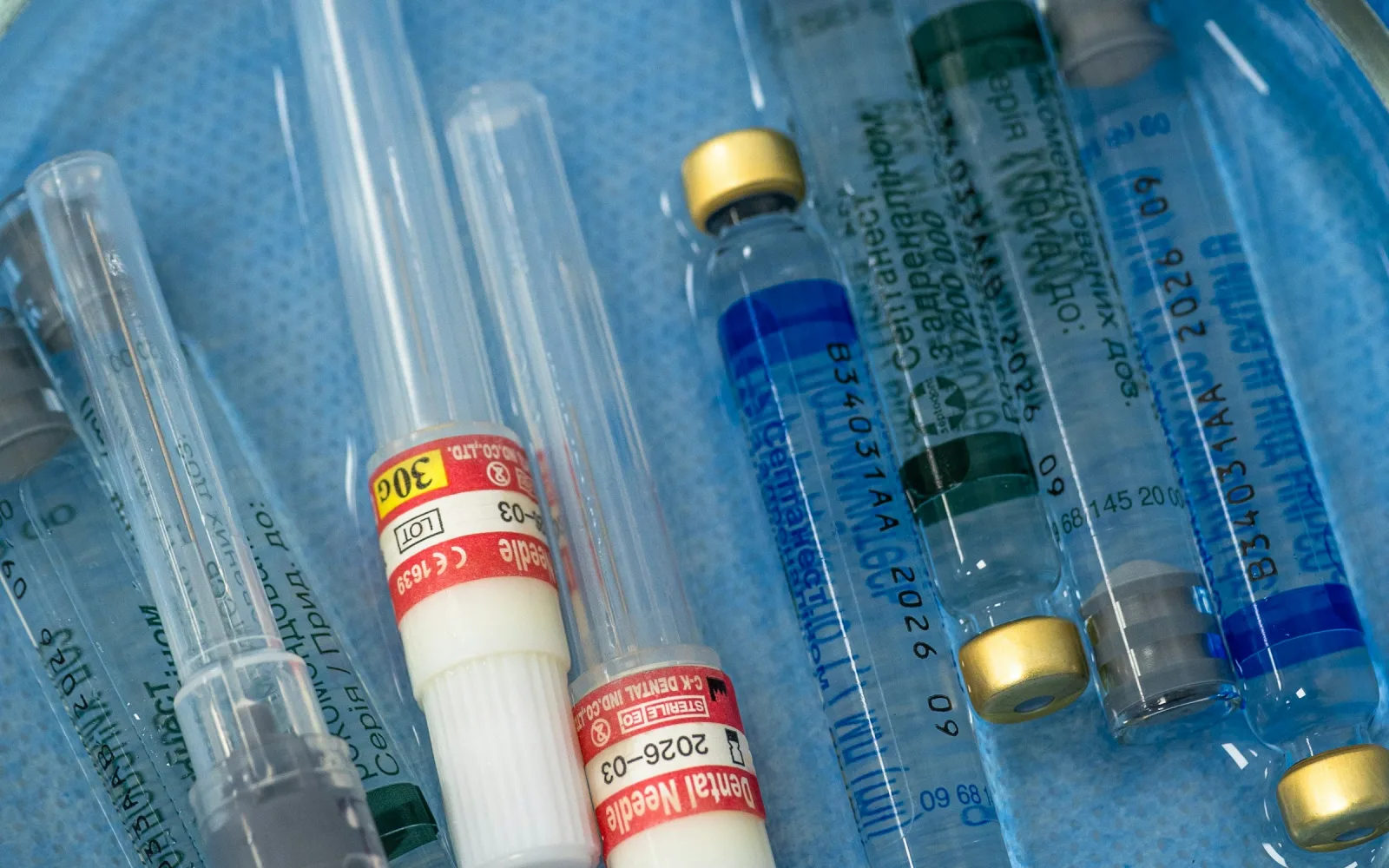
- Sample
- A few cells, drawn with a thin needle
- Fasting
- Usually not needed
- Needle part
- Usually a few minutes
- Bring
- Prescription and earlier reports
What FNAC is and what it can show
FNAC stands for fine needle aspiration cytology. A needle about as thin as an injection needle is passed into the lump, and a syringe draws out a few cells. Cytology is the study of cells, so a pathologist spreads them on glass slides, stains them and looks at them under a microscope.
The test can tell a fluid-filled cyst from a solid mass. It can show whether a swollen gland is reacting to an infection, and whether a nodule in the thyroid looks harmless or needs more tests. Many lumps turn out to be harmless, but a sample is often needed to be sure. FNAC is most often used for:
- Thyroid nodules: lumps in the thyroid gland at the front of the neck.
- Lymph nodes: swollen glands in the neck, armpit or groin.
- Soft-tissue lumps: swellings under the skin, such as a lump on the scalp, arm or back.
- Salivary gland swellings and other lumps in the neck.
For lumps in the breast, see breast FNAC. The breast care team handles them together with the scans that go with them.
When FNAC is a good choice, and when it is not
FNAC suits lumps that lie close to the skin and are big enough to feel. It is quick, needs no stitches and carries a low risk of bleeding.
It is less suitable in some situations. A lump that is deep, very small or hard to feel is better sampled with ultrasound guidance, so the needle can be watched on a screen. Some conditions need the pathologist to see how the tissue is arranged, not only the cells, and your doctor then asks for a biopsy instead.
Not every lump needs sampling. The team reads your referral and scans, confirms that FNAC is the right test and says whether it can be done at the centre. The team will tell you when you book.
What the FNAC result means
The report describes the cells that were seen. It is not a final verdict until your doctor reads it with your examination and scans. Most reports fall into one of four groups.
- Benign: the cells look harmless, for example a cyst or a simple enlarged gland. Your doctor may advise watching it or repeating a scan later.
- Inflammatory or infective: the cells point to inflammation or infection. Extra tests may be needed to find the cause, and treatment depends on it.
- Suspicious or malignant: abnormal cells that suggest cancer are seen. Your doctor usually advises further tests, such as a core biopsy, to confirm the type before any treatment.
- Not enough cells: the sample did not contain enough cells to decide. This is not a bad result. The test is usually repeated, sometimes with ultrasound guidance.
Thyroid reports often use a graded scale called the Bethesda system. Some nodules fall into an in-between group where the cells can be called neither clearly harmless nor clearly abnormal. Your doctor explains what that means for you.
A benign result is reassuring but not always the last word. FNAC can miss a small abnormal area, so a lump that keeps growing may still need a second look.
FNAC compared with a core biopsy
Both tests use a needle, but they collect different material and answer different questions. Your doctor chooses between them.
What is collected
- FNAC
- Loose cells drawn up through a very thin needle.
- Core needle biopsy
- A thin thread of tissue, cut by a slightly wider hollow needle.
What the lab can see
- FNAC
- The features of single cells.
- Core needle biopsy
- The cells and how the tissue is arranged, which helps to name the exact condition.
Numbing
- FNAC
- Often none, or a small injection of local anaesthetic.
- Core needle biopsy
- Local anaesthetic is usually given.
Usually chosen for
- FNAC
- Thyroid nodules, neck glands, cysts and lumps near the skin.
- Core needle biopsy
- Solid masses, deeper organs such as the liver, and cases where the exact type of tumour matters.
Main limit
- FNAC
- The sample can hold too few cells, and it cannot show tissue layout.
- Core needle biopsy
- A slightly higher chance of bleeding, and a longer procedure.
Some people have FNAC first and a core biopsy later if the answer is not clear.
What happens during your visit
-
1
Booking and review
Message or call with your prescription. The team reads your referral and any scans, and confirms whether FNAC suits your lump, whether ultrasound guidance is needed and where it can be done.
-
2
Positioning
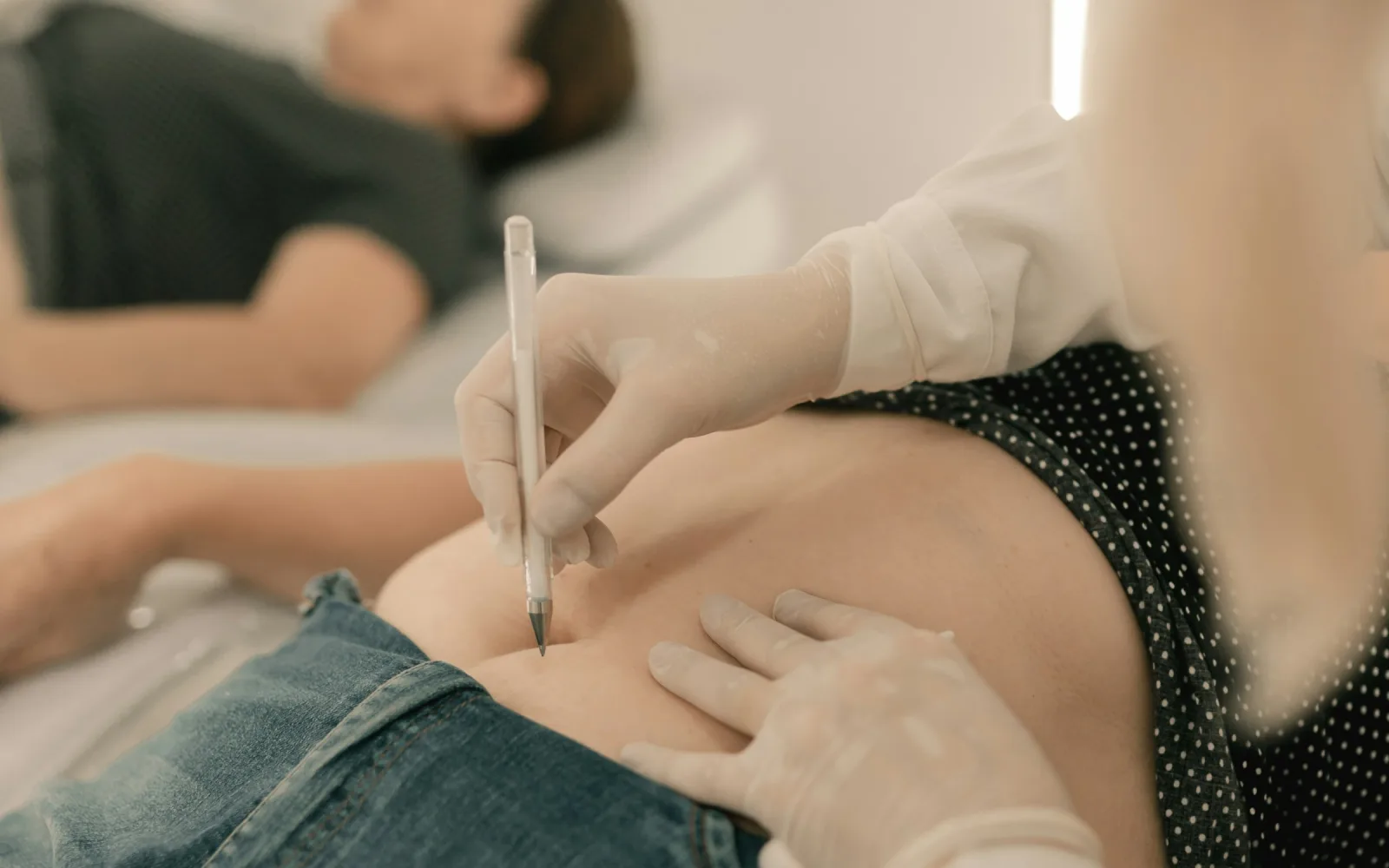
You sit or lie so the lump is easy to reach. For a thyroid nodule you lie back with a pillow under your shoulders. The skin is cleaned with antiseptic.
-
3
Taking the sample
The needle goes into the lump and is moved a few times to collect cells. You feel a sting and some pressure. For a thyroid nodule you are asked not to swallow or talk while the needle is in. More than one pass is common.
-
4
Pressure and dressing
The needle is withdrawn and the site is pressed for a few minutes. A small dressing goes on.
-
5
Slides and report
The cells are smeared on slides or rinsed into a fluid, labelled and sent to the laboratory. The team will tell you when to expect the report. It goes to the doctor who referred you.
Preparation and aftercare
Before your visit
- Eat and drink as usual. FNAC alone needs no fasting, but follow any instruction the team gives for another test on the same day.
- Tell the team and your doctor if you take aspirin, clopidogrel, warfarin or another blood thinner. Do not stop a prescribed medicine yourself.
- Wear clothes that give easy access to the lump. For a neck lump, avoid a high collar and necklaces.
- Say so if you faint at the sight of needles, have a bleeding problem or are allergic to local anaesthetic.
Please bring
- Your doctor's prescription or referral
- Earlier ultrasound or other scan reports
- Any earlier FNAC or biopsy report
- A list of your medicines
After your visit
- A small bruise or a tender spot is common and settles in a few days.
- Keep the dressing clean and dry for as long as the team advises.
- You can usually return to normal activity afterwards, unless you were told otherwise.
- Take the report to the doctor who referred you, who can read it alongside your scans and your examination.
When to get medical help after FNAC
Problems after FNAC are uncommon. Contact your doctor or the centre the same day, or go to the nearest emergency department, if you notice:
- A swelling at the site that keeps growing, especially in the neck.
- Difficulty breathing or swallowing after a neck or thyroid sample. Go to the emergency department at once.
- Bleeding that does not stop after ten minutes of firm pressure.
- Fever, or redness, warmth, pus or increasing pain at the site.
FNAC: common questions
Is FNAC painful?
Expect a quick sting, like an injection, and a feeling of pressure while the needle moves. It is over in a few minutes. Tell the person doing the test if the discomfort is more than you expected, and they will pause.
Do I need to fast before an FNAC test?
Usually not. FNAC takes cells from a lump near the surface, so an empty stomach does not matter. If you are also having blood tests or another scan that day, the team tells you whether those need fasting.
Can FNAC tell whether a lump is cancer?
It can show cancer cells in many cases, and it can show that a lump is harmless. A normal result does not always rule out cancer, because the needle may miss the abnormal part. Your doctor weighs the result with your scans and examination, and may advise a core biopsy.
What if the report says the sample was inadequate?
It means the slides held too few cells to give an answer. It does not mean something is wrong. The usual step is to repeat the test, often with ultrasound guidance, or to move to a biopsy. Your doctor will advise.
Can FNAC spread cancer along the needle path?
This is very uncommon with a thin needle. Not knowing what a lump is usually carries the bigger risk, so doctors do not avoid sampling for this reason. Ask your doctor if you are worried.
Is a prescription needed for an FNAC test in Lucknow?
FNAC is done on a doctor's advice, so bring a prescription or referral. If you do not have one, message the team first. They will tell you whether the test makes sense and what to do next.
Is breast FNAC a different test?
The technique is the same, but breast lumps are handled by the breast care team, who arrange the matching scans. Use the breast FNAC page for that service. This page is for FNAC of the neck, thyroid, glands and other lumps.
Where can I get an FNAC test near Kathauta Chauraha?
We are at 4/12, Vijayant Khand, near Kathauta Chauraha, Gomti Nagar. Book on WhatsApp at +91 70809 82920 or call 0522-3180995. Send your prescription first so the team can confirm that FNAC can be done and whether it needs ultrasound guidance.
Related services
Tests and care that often go together

Appointments
Ask about FNAC in Gomti Nagar, Lucknow
Send your prescription and any earlier reports on WhatsApp or call the centre. The team reviews them and tells you the next step.
4/12, Vijayant Khand, Gomti Nagar · 0522-3180995
