Interventional Radiology • Gomti Nagar
Bronchial Artery Embolization in Lucknow
Bronchial artery embolization (BAE) blocks the artery that is bleeding into the airways. Coughing up blood needs urgent medical care, so this page also explains when not to wait.
- Vijayant Khand, Gomti Nagar, Lucknow
- Mon to Sat 9 AM to 8 PM, Sun 10 AM to 2 PM
- If you cough blood
- Heavy or repeated: emergency care
- What it does
- Blocks the bleeding artery
- First imaging
- Chest X-ray, then more as advised
- Where it is done
- Confirmed after the imaging is reviewed
Coughing up blood: when it is an emergency
Coughing up blood, called haemoptysis, always needs medical attention. If you are bringing up more than streaks of blood, if it keeps happening, or if you feel breathless, dizzy or faint, go to the nearest hospital emergency department now. Do not wait for a scan or a clinic appointment.
While you get help, sit upright rather than lying flat. Do not travel alone: ask someone to take you, or call an ambulance. Take your earlier reports and medicines if they are at hand, but do not delay leaving to find them.
Even a small amount of blood, or blood-streaked phlegm, should be seen by a doctor soon, ideally the same day. A small bleed can be the first sign of a larger one, and the cause needs to be found.
What is bronchial artery embolization?
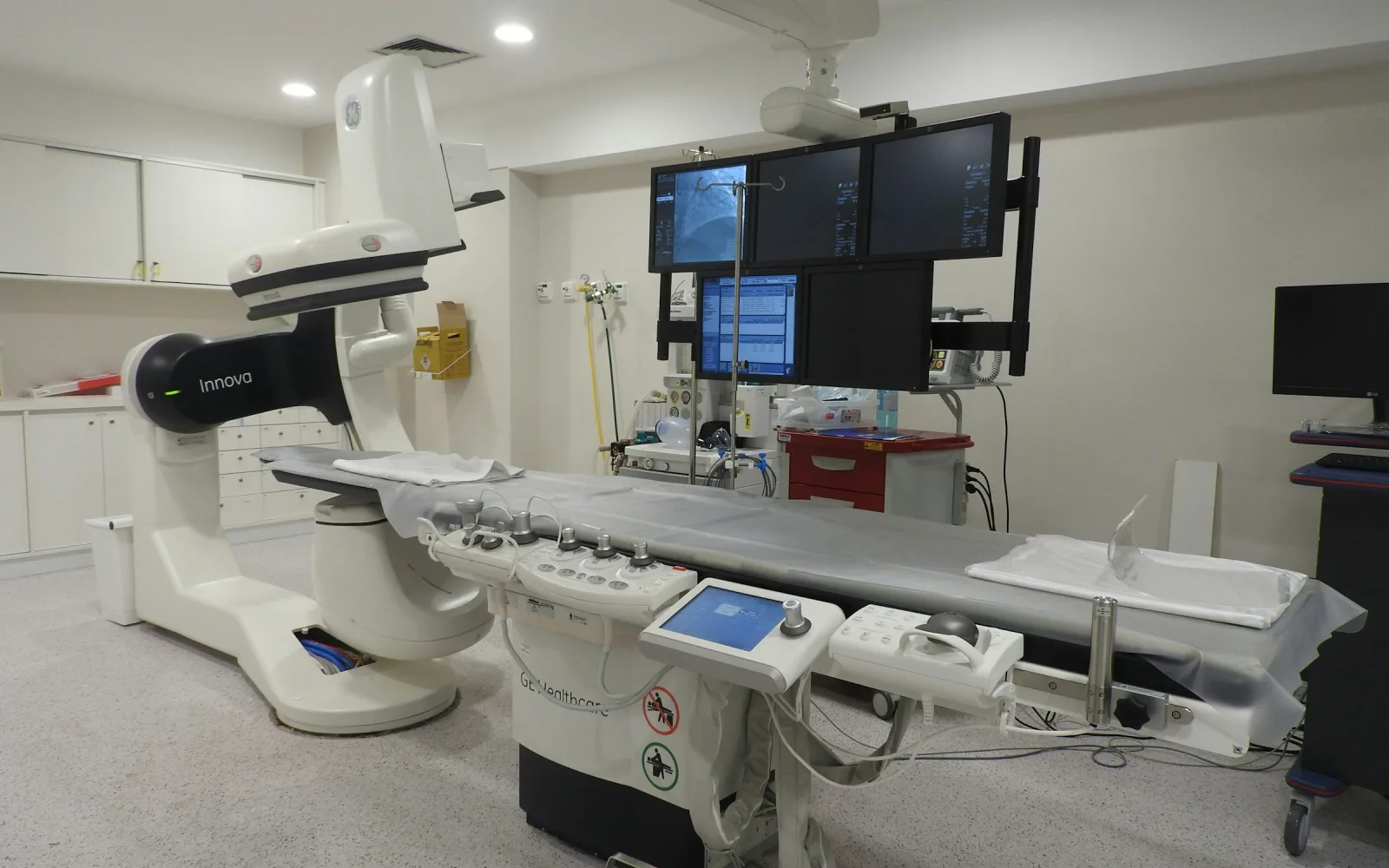
Bronchial artery embolization (BAE) blocks the artery that is feeding a bleeding area in the lung or airways. In serious coughing of blood, the bleeding most often comes from the bronchial arteries, which are small vessels that supply the walls of the airways. When the lung is diseased, these arteries can enlarge and bleed.
A thin catheter is passed into an artery, usually at the groin. Under live imaging, the radiologist injects dye to find the abnormal arteries, then releases tiny particles into them to block the flow. Sometimes other arteries that supply the chest wall also need treatment.
The aim is to control the bleeding. BAE does not treat what caused it, so the bleeding can return.
What causes the bleeding, and how it is investigated
Common causes include tuberculosis and the scarring it leaves, long-standing airway damage called bronchiectasis, chest infections, a fungal ball in an old lung cavity, and lung tumours. Sometimes no cause is found.
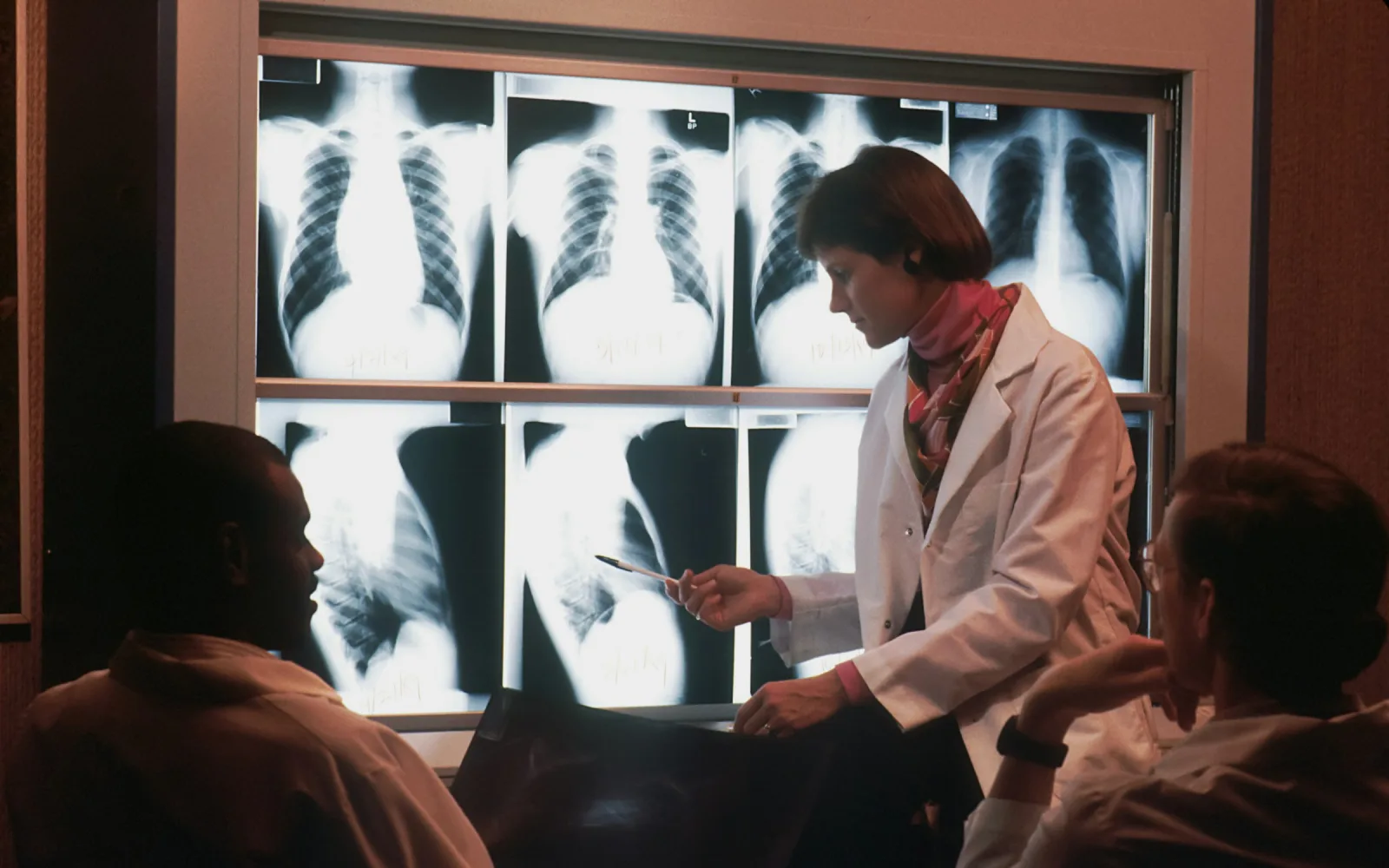
A chest X-ray is the usual first test. It can show infection, scarring, a cavity or a mass. A CT scan of the chest, often with dye, shows the lung changes in detail and maps the arteries before embolization. We do not do CT or MRI scanning at the centre. The treating doctor advises where to get one, and we can review the images and reports.
Blood tests, a sputum test and sometimes a bronchoscopy, where a thin camera looks into the airways, are also used. A biopsy may be needed if a mass is seen. Some people with lung disease also have fluid around the lung, and a pleural tap to drain it is a separate procedure.
When doctors consider embolization, and the other options
BAE is considered when the bleeding is heavy or keeps coming back, and the bleeding artery can be found on imaging. It may be done as an emergency, or in a planned way for someone who coughs up blood repeatedly.
Other options include treating the cause with antibiotics or anti-tuberculosis medicines, medicines that reduce bleeding, treatment through a bronchoscope, and surgery to remove the diseased part of the lung. Which is right depends on how much blood has been lost, the cause, the condition of the lungs and how fit a person is for surgery.
BAE may be less suitable if the artery cannot be reached safely, or if the bleeding does not come from a bronchial artery. The specialist team decides this from the imaging.
Emergency bleeding is dealt with at the nearest hospital with emergency and chest services. If your doctor has planned BAE for repeated bleeding, you can send the referral, imaging and reports to our team. The team reviews them first, then confirms whether the procedure is carried out at the centre or elsewhere, and by whom.
Risks and limits
The bleeding can come back, because the lung disease is still there. A person may need a repeat embolization, treatment of the cause, or surgery. These are the other risks, in general terms:
- Chest pain and difficulty swallowing: for a few days after the procedure, which usually settles.
- Fever: a low fever can follow, as with other embolization procedures.
- Spinal cord injury: rarely, a small artery that supplies the spinal cord arises from the same place as a bronchial artery. If particles reach it, weakness or numbness of the legs can follow. Careful mapping of the arteries aims to avoid this.
- Treatment reaching the wrong place: particles can rarely reach another organ, such as the gullet.
- Dye and puncture site: an allergic reaction, kidney strain, bruising or an injured artery at the groin.
Your own risks depend on the lungs, the cause and your general health. The team explains them before asking for consent. In an emergency, the treating team weighs them against the danger of continuing bleeding.
From emergency care to planned treatment
-
1
Emergency care first
The treating doctors check your breathing, blood count and clotting, treat infection and arrange chest imaging. Anyone bleeding now should be at a hospital.
-
2
Share the chest imaging
Once the situation is stable and your doctor has advised embolization, share the referral, chest X-ray, CT images and reports, and blood tests with the centre.
-
3
Team review
The team goes through the records and says what else is needed. It then confirms where the procedure can be carried out, and by whom.
-
4
The procedure
The catheter is passed into an artery, usually at the groin, and guided to the bronchial arteries. Particles are released into the abnormal ones. The plan for sedation or anaesthesia is explained to you beforehand, where time allows.
-
5
Observation and recovery
You are watched for bleeding, chest pain, fever and any change in the legs. The team tells you how long you need to lie still and when you can move about.
-
6
Treating the cause
The reason for the bleeding is treated, with follow-up chest imaging and visits to your chest specialist.
Preparation and aftercare
Before your visit
- Keep every chest X-ray, CT image and report together, with any bronchoscopy or sputum reports.
- Note how often you cough blood, roughly how much, and when it began.
- Tell the team about allergies, particularly to scan dye, and about kidney problems, diabetes and blood thinners.
- Do not stop prescribed medicines, including tuberculosis medicines, unless your doctor tells you to.
- Fasting rules come from the team doing the procedure. In an emergency, they decide on the day.
Please bring
- Referral and clinic or hospital notes
- Chest X-ray and CT images and reports
- Recent blood test reports
- List of current medicines, including tuberculosis treatment
After your visit
- Rest, and avoid heavy exertion for as long as the team advises.
- Keep taking tuberculosis or other infection treatment as prescribed, and do not stop unless your doctor tells you to. The cause of the bleeding still needs to be treated.
- Avoid smoking and tobacco, which irritate the lungs.
- Keep the groin site clean and dry, and avoid heavy lifting as advised.
- Attend the follow-up visit with your chest specialist.
Warning signs: do not wait for an appointment
Go to the nearest hospital emergency department straight away if you have any of these, before or after a procedure. Smaller amounts of blood still need a doctor soon.
- Coughing up more than streaks of blood, or any blood with breathlessness, dizziness or faintness.
- Weakness, numbness or heaviness in the legs, or difficulty passing urine.
- Fever with shivering, or chest pain that is severe or getting worse.
- Bleeding, swelling or a growing lump at the groin, or a cold, pale or numb leg.
- Severe difficulty swallowing, or vomiting blood.
Bronchial Artery Embolization: common questions
Is coughing up blood an emergency?
It can be. Go to the nearest hospital emergency department if you cough up more than streaks of blood, if it keeps happening, or if you are breathless or faint. Even a small amount should be checked by a doctor, ideally the same day.
What is bronchial artery embolization used for?
It is used to control bleeding from the airways or lungs when the source is an enlarged bronchial artery, mostly in people with long-standing lung disease. It does not treat the underlying cause.
Is embolization the only way to stop coughing blood?
No. Many people are managed by treating the cause, with medicines, or through a bronchoscope. Embolization is used for heavier or repeated bleeding, and when imaging shows an artery that can be treated. Surgery is another option.
Which scan is needed before bronchial artery embolization?
A chest X-ray is usually done first. A CT scan of the chest, often with dye, is commonly used to plan the procedure. We offer digital X-ray, but CT is not done here, so your doctor advises where to have it done.
Can the bleeding come back after BAE?
Yes. The lung disease that caused the bleeding is still there, and new vessels can form. Treating the cause matters as much as the procedure. Tell your doctor at once if blood returns.
Can BAE damage the spinal cord?
This is a rare but recognised risk, because a small spinal artery can share its origin with a bronchial artery. Teams look for it on the artery pictures. Where time allows, the doctor discusses this risk with you or your family before you agree.
Do you perform bronchial artery embolization in Lucknow?
A bleeding emergency is treated at a hospital emergency department, not through a booking. For planned embolization, send us the referral, imaging and reports. The team will tell you after that review where, and by whom, the procedure can be carried out.
What can I do while waiting for help if I am coughing up blood?
Sit upright and stay as calm as you can. Someone should travel with you to the hospital. Reports can follow later, so do not delay leaving to look for them.
Related services
Tests and care that often go together
Appointments
Ask about Bronchial Artery Embolization in Gomti Nagar, Lucknow
Send your prescription and any earlier reports on WhatsApp or call the centre. The team reviews them and tells you the next step.
4/12, Vijayant Khand, Gomti Nagar · 0522-3180995
