Dr. Akanksha Bajpai
Radiologist
- MBBS, MD
- Ex. PGI Chandigarh
- Ex Consultant, Fortis Hospital, Mohali
Her profile supports diagnostic imaging, ultrasound, radiology and patient-focused interpretation.
Read her profile4/12, Vijayant Khand, Gomti Nagar, Lucknow Mon–Sat 9 AM–8 PM · Sun 10 AM–2 PM
Pelvic Scans • Gomti Nagar
Pelvic ultrasound and transvaginal scans (TVS) look at the womb and ovaries for period problems, pelvic pain, cysts, fibroids and fertility tracking. This page explains the bladder rules and what you will feel.
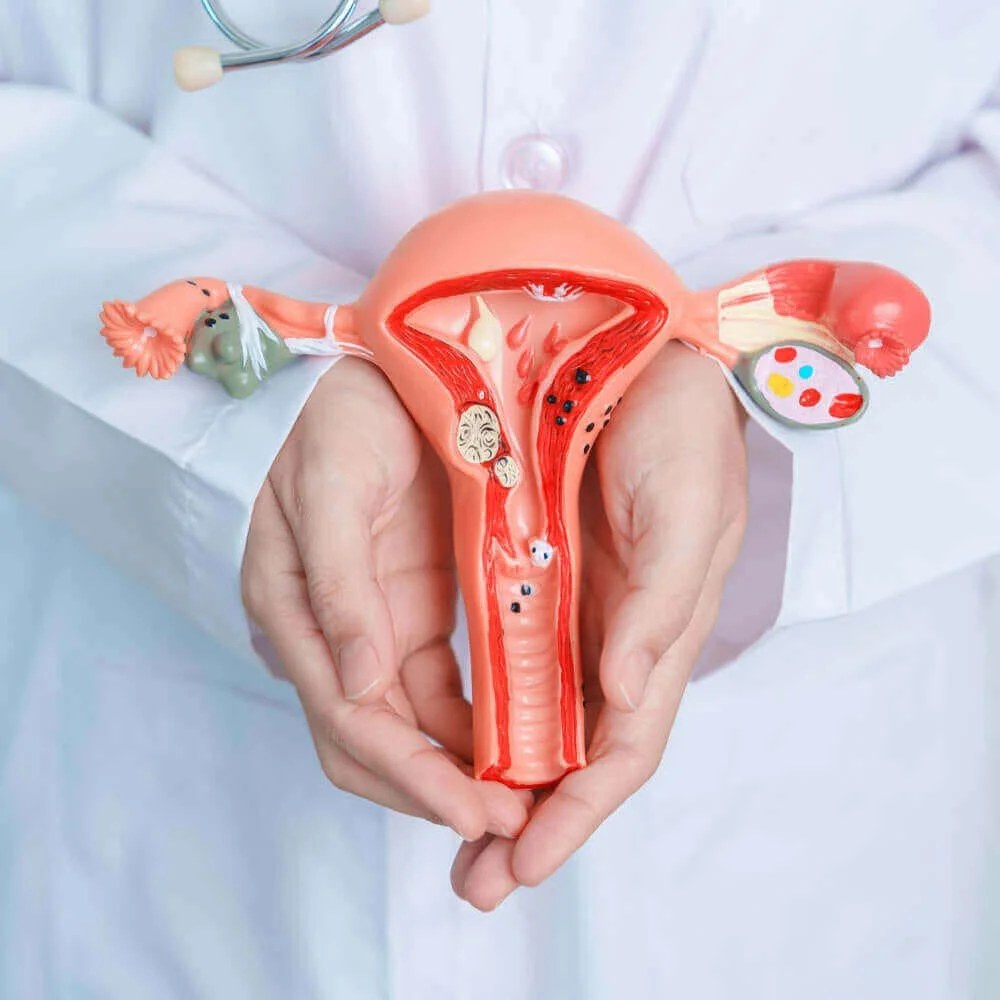
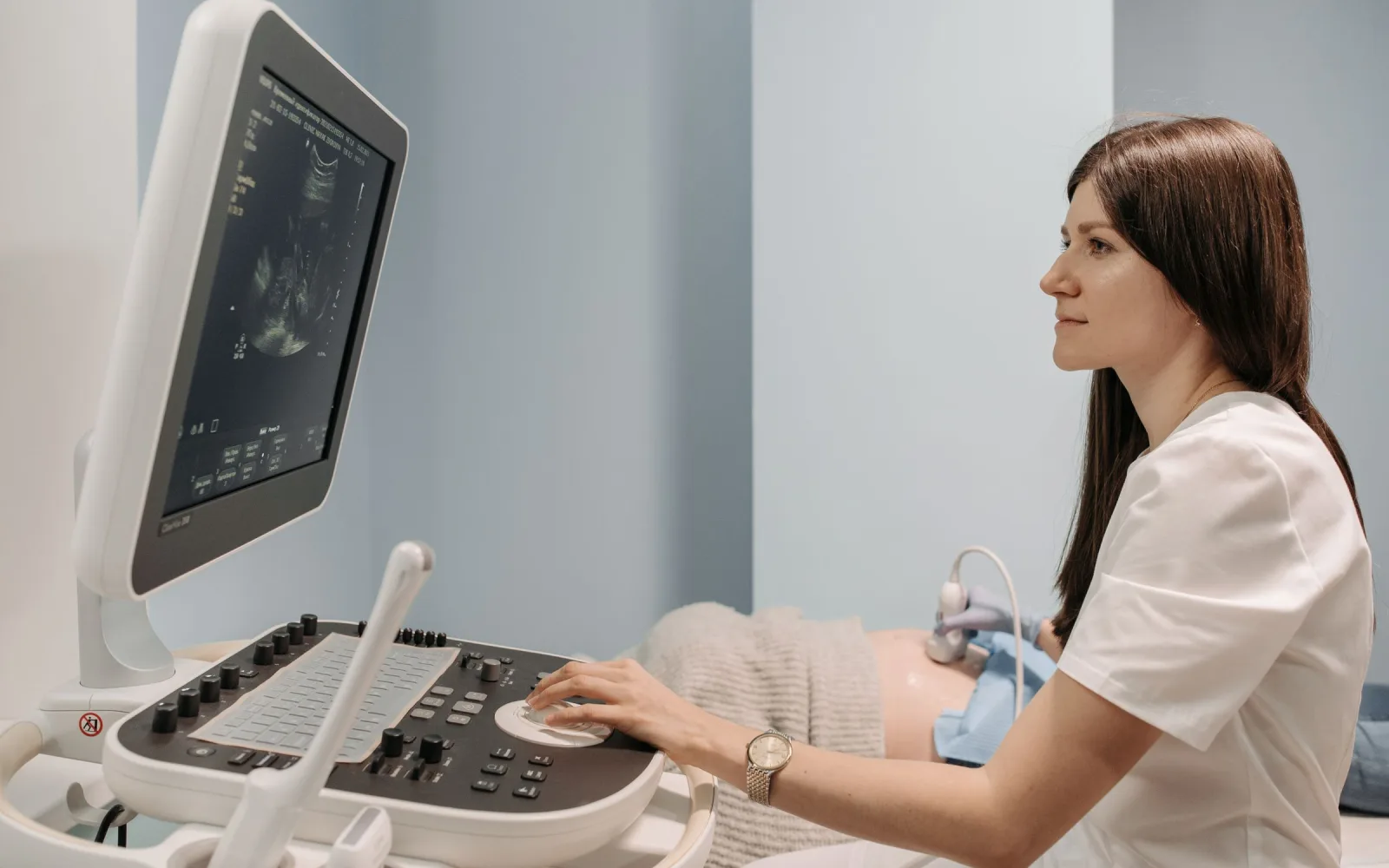
A pelvic ultrasound, also called a transabdominal scan, is done over the lower abdomen. A full bladder acts like a window. It lifts the bowel out of the way so sound can reach the womb and ovaries. The scan gives a wide view and is the first step for many problems.
A transvaginal scan, or TVS, passes a slim, covered probe a short way into the vagina, so it sits close to the womb and ovaries. It shows the womb lining, the ovaries and small cysts or fibroids in finer detail. It helps most when the lower abdomen is thick or the womb is tilted backwards.
Many women have both in one visit. The abdominal view comes first. Then you empty your bladder and have the TVS. Your symptoms, your age and your doctor's question decide which you need.
It depends on the scan. A wrong bladder is a common reason for a repeat visit.
If your bladder becomes painfully full while you wait, tell the team. Passing a little urine is better than lying in discomfort, and they will tell you how much to drink again.
It shows the size, shape and position of the womb, the thickness of its lining, the ovaries and their follicles, and any fluid in the pelvis. It can find fibroids (muscle growths in the womb wall), polyps and ovarian cysts. It can show whether a coil (an intrauterine contraceptive device, or IUCD) is in the right place, and some causes of heavy bleeding or pelvic pain. Ovaries with many small follicles may also be seen, which doctors read together with symptoms and blood tests.
It cannot tell with certainty what a growth is made of. It cannot show whether the fallopian tubes are open, and it can miss early endometriosis. A cyst may need a repeat scan after a period, or another test. Tube checks need a different test that your doctor names. Send us the prescription and the team will confirm.
If a scan finds fibroids that cause heavy bleeding or pressure, your gynaecologist decides on treatment. Some options avoid open surgery, such as uterine fibroid embolization. When your doctor wants to see blood flow in an ovary or a growth, Colour Doppler can be added.
If the scan is done in early pregnancy, the PC-PNDT Act applies, as it does at every ultrasound centre in India. The Act makes it an offence to tell parents or relatives the sex of the baby, so our team cannot do so, and a short declaration form is signed before any scan in pregnancy.
Follicular monitoring, also called follicle tracking, uses TVS several times in one cycle. A follicle is a fluid-filled sac in the ovary that holds an egg. At each scan the radiologist measures the follicles in both ovaries and the thickness of the womb lining. Later scans show signs that the egg has been released.
Your gynaecologist or fertility doctor sets the dates. Scans usually start in the first half of the cycle, counted from the first day of your period, and are often repeated every day or two until ovulation is confirmed. The number of visits differs for each woman and each treatment plan.
Tell the team your cycle day and any tablets or injections you are taking, so the measurements are read correctly. Keep every report and carry them all to each visit.
Send the prescription on WhatsApp and say which day of your cycle it is, or whether you may be pregnant. The team confirms which scans you need and how to prepare.
Keep your bladder as advised. You may be asked to change into a gown or loosen clothing below the waist. Tell the radiologist when your last period began and about any pelvic surgery.
Warm gel is spread on the lower abdomen and the probe is moved across it. The probe's pressure on a full bladder can be uncomfortable but brief.
You empty your bladder and lie with your knees bent. The probe gets a disposable cover and gel, and is passed in gently. It feels like pressure and can be mildly uncomfortable, but it should not be sharp. Say so if it hurts, and the radiologist will stop or adjust.
The radiologist writes the report after the scan. The team will tell you the report timing when you book.
Show the report to your gynaecologist. For follicle tracking, carry the reports from the whole cycle.
Before your visit
Please bring
After your visit
Go to a hospital emergency department, or call 112, if you have:
Dr. Akanksha Bajpai
Radiologist
Her profile supports diagnostic imaging, ultrasound, radiology and patient-focused interpretation.
Read her profileEmpty. Pass urine just before a TVS, because a full bladder pushes the womb and ovaries away from the probe. A pelvic scan over the abdomen needs the opposite, a full bladder. If you are having both, arrive full and empty your bladder between them.
It is usually not painful. You feel pressure from the probe, and some women find it mildly uncomfortable. It should not be sharp. Relax your lower body, breathe slowly and tell the radiologist if it hurts.
You can ask for an abdominal scan instead, and the choice is yours. A TVS is never done without your consent. Some questions are answered less clearly without the internal view, and the radiologist will say so in the report so your doctor knows.
Yes, if your doctor has asked for it. Timing depends on the question. Some scans are meant for a specific day of the cycle, so check your doctor's note and mention any bleeding to the team.
It varies. Your doctor sets the dates from your cycle and your treatment, and the scans stop once ovulation is confirmed. The number of visits differs for each woman and each cycle.
A urine or blood test confirms pregnancy first. A scan is then used to check that it is in the womb and to date it. From a week or two after a missed period a TVS can show an early pregnancy. The team cannot tell you the baby's sex, because the PC-PNDT Act forbids it. Early pregnancy scans are explained on our pregnancy scan page.
Come to 4/12, Vijayant Khand, near Kathauta Chauraha, Gomti Nagar, Lucknow. WhatsApp the prescription to +91 70809 82920 or call 0522-3180995. Tell the team which day of your cycle it is, and they will confirm the scan you need and how to prepare.
Related services
Appointments
Message us on WhatsApp or call the centre. Tell us the test you need and your preferred day, and the team will confirm the details.
4/12, Vijayant Khand, Gomti Nagar · 0522-3180995