Ultrasound-Guided Tissue Sampling
Ultrasound-Guided Biopsy in Gomti Nagar, Lucknow
In an ultrasound-guided biopsy, a core needle takes thin threads of tissue while ultrasound shows the needle tip live. It is used for the liver, thyroid, lymph nodes and soft-tissue lumps.
- Vijayant Khand, Gomti Nagar, Lucknow
- Mon to Sat 9 AM to 8 PM, Sun 10 AM to 2 PM
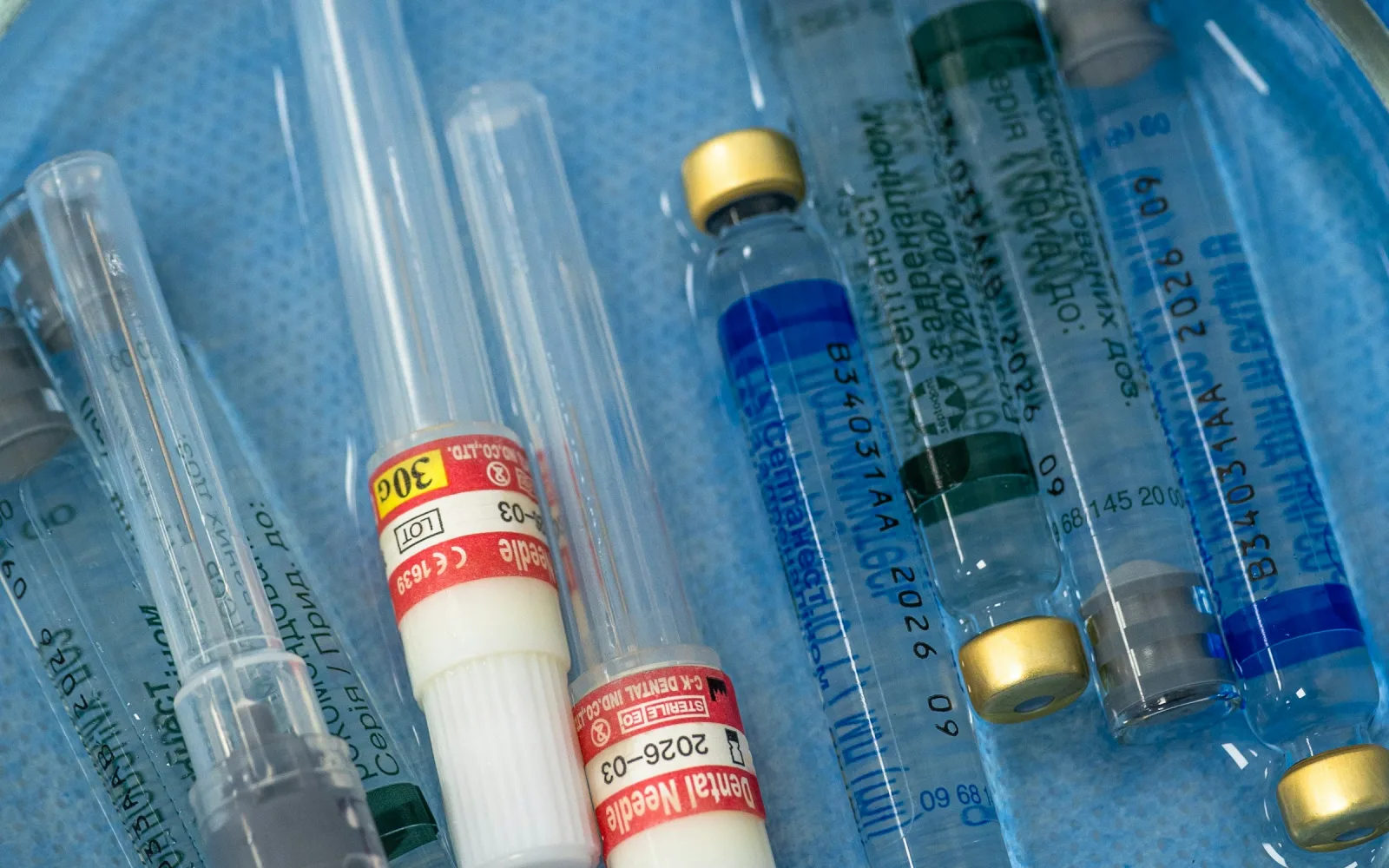
- Guidance
- Live ultrasound
- Common sites
- Liver, thyroid, nodes, soft tissue
- Main risk
- Bleeding, so tell us about blood thinners
- Before
- Blood count and clotting tests
How an ultrasound-guided biopsy works
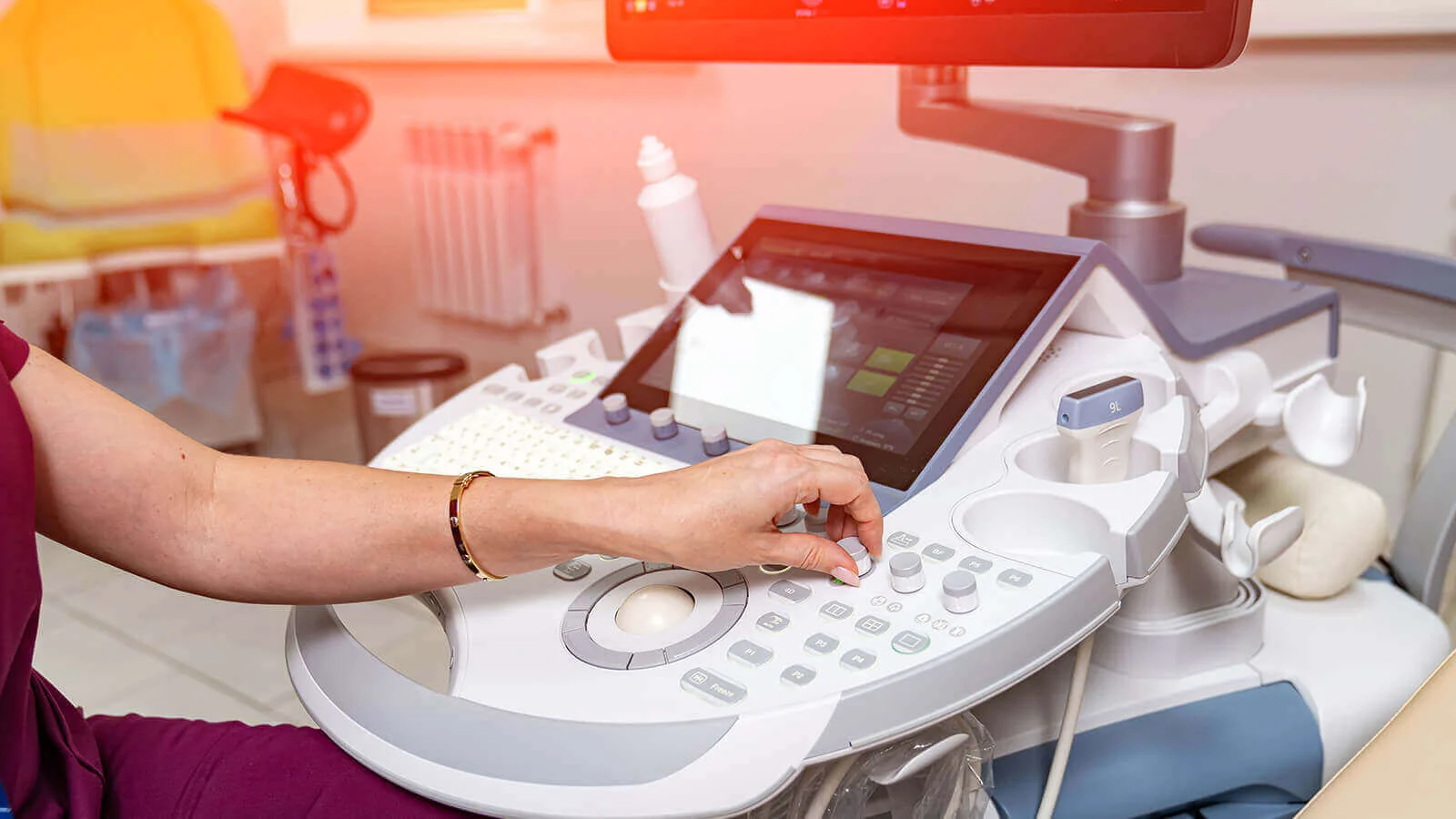
The radiologist first scans the target and plans the shortest safe path to it. The skin is cleaned and numbed with local anaesthetic, and a hollow core needle is passed along that path while the screen shows its tip. Ultrasound lets the doctor watch the needle move in real time, which is its great advantage over aiming by touch alone.
The needle is fired by a spring-loaded device. You hear a loud click as it fires, and a thin core of tissue is caught in a notch in the needle. Several cores are usually taken, each from a slightly different line.
When a vessel may lie close to the path, Colour Doppler can show blood flow on the screen first, so that the path avoids it.
What can be biopsied under ultrasound
The target must be clearly visible and reachable along a safe path. The common ones are:
- Liver: a mass, or the liver as a whole when tests stay abnormal. You are asked to hold your breath briefly as the needle passes.
- Thyroid: a nodule, usually after FNAC did not give a clear answer.
- Lymph node: glands in the neck, armpit, groin or abdomen. A core often gives more detail than cells alone, which helps when the exact type of the disease has to be named.
- Soft tissue: a lump in muscle, fat or under the skin, where the exact type decides the next step.
- Other organs, such as the kidney, when your doctor advises it and the target is clearly seen.
Breast tissue has its own service, breast biopsy. For the general idea of a biopsy and what happens to the sample, see biopsy.
Ultrasound cannot see through bone or gas. A target behind them, or in the lung, may need another route, and the doctor advises which.
Bleeding risk and blood thinners
A core needle leaves a small hole in the organ, and the organ can bleed from it. Usually this shows only as a bruise. Rarely the bleeding is deeper and needs longer observation or treatment, which may mean time in hospital. The chance is higher if your blood clots slowly, your platelet count is low or you take blood thinners.
So the team usually asks for a blood count and a clotting test before the day. Tell them about every medicine that affects clotting:
- Aspirin and clopidogrel.
- Warfarin, apixaban, rivaroxaban or dabigatran.
- Heparin injections.
- Painkillers such as ibuprofen and diclofenac, and any herbal products you use regularly.
Do not stop any of them yourself. Some people take these medicines to prevent a stroke or to protect a heart stent, so stopping can be dangerous. Tell the team and your own doctor what you take. They decide together whether a pause is safe and for how long.
Other risks, and what the result can and cannot tell
Infection at the site is uncommon. Soreness for a day or two is usual. The needle can, rarely, injure a structure beside the target, which is why the path is chosen to avoid them.
Sometimes the cores come from a scar or a dead area inside the lump, and the pathologist cannot give a clear answer. A repeat sample may then be advised. The team goes through the risks that apply to your site before you sign consent.
What happens on the day
-
1
Review of your papers
The team reads your referral, ultrasound and blood tests, and confirms that the target can be seen, that a biopsy is safe for you and where it will be done.
-
2
Consent and scan
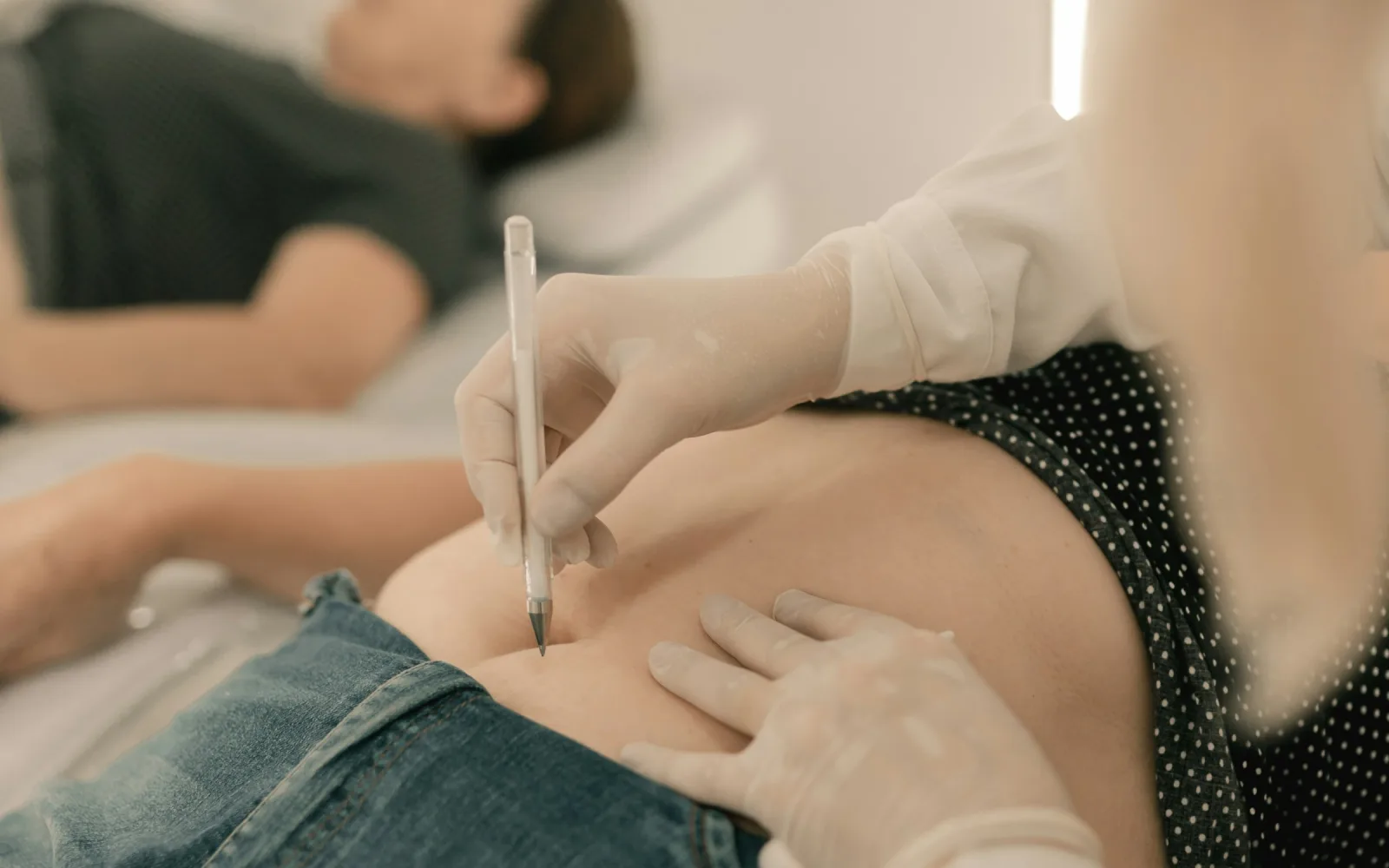
You sign consent after hearing the risks. The radiologist scans the target, plans the path and marks the skin.
-
3
Numbing and sampling
The skin is numbed. You lie still and hold your breath when asked, while the needle takes the cores. You feel pressure and hear clicks.
-
4
Observation
A dressing goes on and you rest. The time depends on the site and is longer for the liver, with your pulse and blood pressure checked at intervals. The team will tell you when you book.
-
5
Lab and report
The cores are labelled and sent to a pathology laboratory. The report goes to your referring doctor.
Preparation and aftercare
Before your visit
- Fasting for several hours is common before a liver or abdominal biopsy. The team confirms what applies to your site when you book.
- Have the blood count and clotting test the team asks for, close to the day.
- List every blood thinner and painkiller you take, and tell the team and your doctor. Do not stop any of them yourself.
- If you have diabetes, ask your doctor how to adjust insulin or tablets if you must fast.
- Come with a relative or friend, and plan to rest for the day.
Please bring
- Your doctor's prescription or referral
- Earlier ultrasound reports and images
- Blood test reports from the last few days
- A list of your medicines, with blood thinners marked
After your visit
- Rest for the remainder of the day. Avoid lifting and hard exercise until the team says you can.
- Keep the dressing dry. A bruise and a sore spot are normal.
- If a medicine was paused, ask your doctor when to restart it. Do not restart it on your own.
- Keep the follow-up visit with the referring doctor to discuss the report.
Warning signs after an ultrasound-guided biopsy
Do not wait for the follow-up visit. Go to the nearest emergency department at once if you faint, have severe or worsening pain, or cannot stop bleeding. Contact your doctor or the centre the same day for the others:
- Bleeding that soaks the dressing or carries on after ten minutes of firm pressure.
- A swelling at the site that is growing or feels tight.
- Trouble breathing or swallowing after a biopsy in the neck. Go to the emergency department at once.
- Dizziness, fainting, a racing heart or cold, clammy skin.
- Pain in the abdomen or the tip of the shoulder that gets steadily worse after a liver biopsy.
- Fever with chills, or pus at the site.
Ultrasound-Guided Biopsy: common questions
Why is ultrasound used for a biopsy?
Ultrasound shows the lump and the needle at the same time, so the doctor can place the tip inside the target and keep clear of blood vessels and organs. It also lets the radiologist take samples from the most useful part of the lump.
Is an ultrasound-guided liver biopsy safe?
It is a commonly performed procedure and serious complications are uncommon, but it is not free of risk. Bleeding is the main one, which is why clotting tests and planning for blood thinners matter. The team explains the risks before you consent.
I take aspirin for my heart. Can I still have a biopsy?
Possibly, but do not stop it yourself. Whether it is safe to pause depends on why you take it. Tell the team, and ask the doctor who prescribed it. The two decide together.
Will I be awake during the biopsy?
Usually yes. The skin and the tissue along the needle path are numbed. If sedation is thought necessary for you, the team tells you who can give it and where, after reviewing your papers.
How long do I stay after the biopsy?
It depends on the site. A thyroid or lymph node biopsy needs a short rest and a check of the site. A liver biopsy needs longer observation. The team will tell you when you book.
Can every lump be biopsied under ultrasound?
No. Ultrasound works only when the target shows clearly and a safe path leads to it. If bowel gas, bone or lung lies in the way, another route may be needed. The team tells you after reading your scans.
Can I go back to work the next day?
It depends on your work and the site. Plan to take it easy for the remainder of the day, and avoid heavy lifting for as long as the team advises. A desk job is often possible sooner than manual work. Ask when you book.
Where can I get an ultrasound-guided biopsy in Lucknow?
The centre is at 4/12, Vijayant Khand, near Kathauta Chauraha, Gomti Nagar. Message the team on WhatsApp at +91 70809 82920 or call 0522-3180995 with your prescription and scans. They confirm whether the biopsy can be done at the centre or elsewhere, and how to prepare.
Related services
Tests and care that often go together
Appointments
Ask about Ultrasound-Guided Biopsy in Gomti Nagar, Lucknow
Send your prescription and any earlier reports on WhatsApp or call the centre. The team reviews them and tells you the next step.
4/12, Vijayant Khand, Gomti Nagar · 0522-3180995
