Interventional Radiology • Gomti Nagar
Uterine Fibroid Embolization in Lucknow
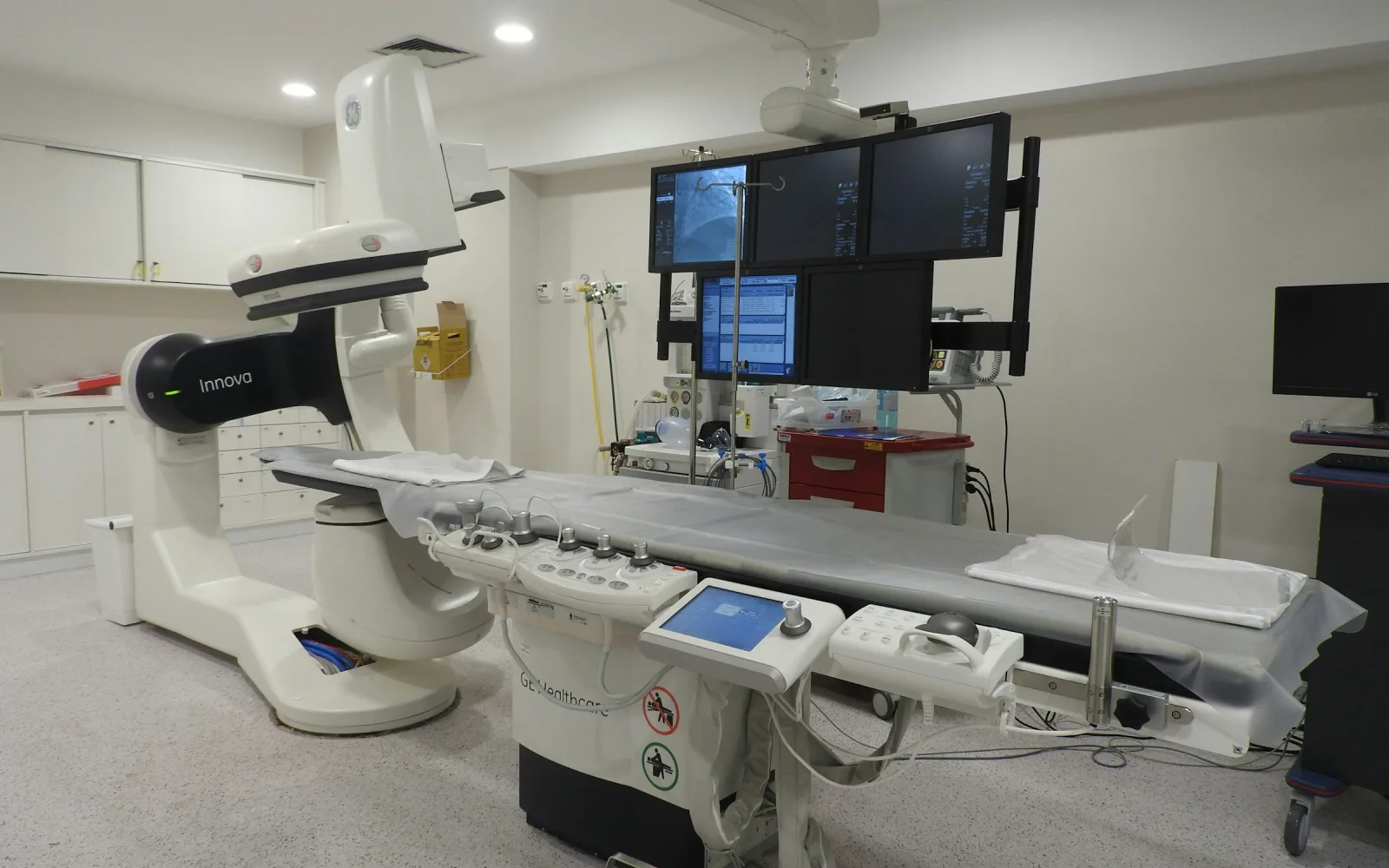
UFE blocks the blood supply to fibroids through a thin tube placed in an artery. It is one option for fibroids that cause heavy periods or pressure, and your gynaecologist is part of the decision.
- Vijayant Khand, Gomti Nagar, Lucknow
- Mon to Sat 9 AM to 8 PM, Sun 10 AM to 2 PM
- First test
- Gynaecological ultrasound
- Route
- Thin tube through an artery
- Key question
- Do you plan a future pregnancy?
- Where it is done
- Confirmed after we review your scans
What are fibroids, and when do they need treatment?
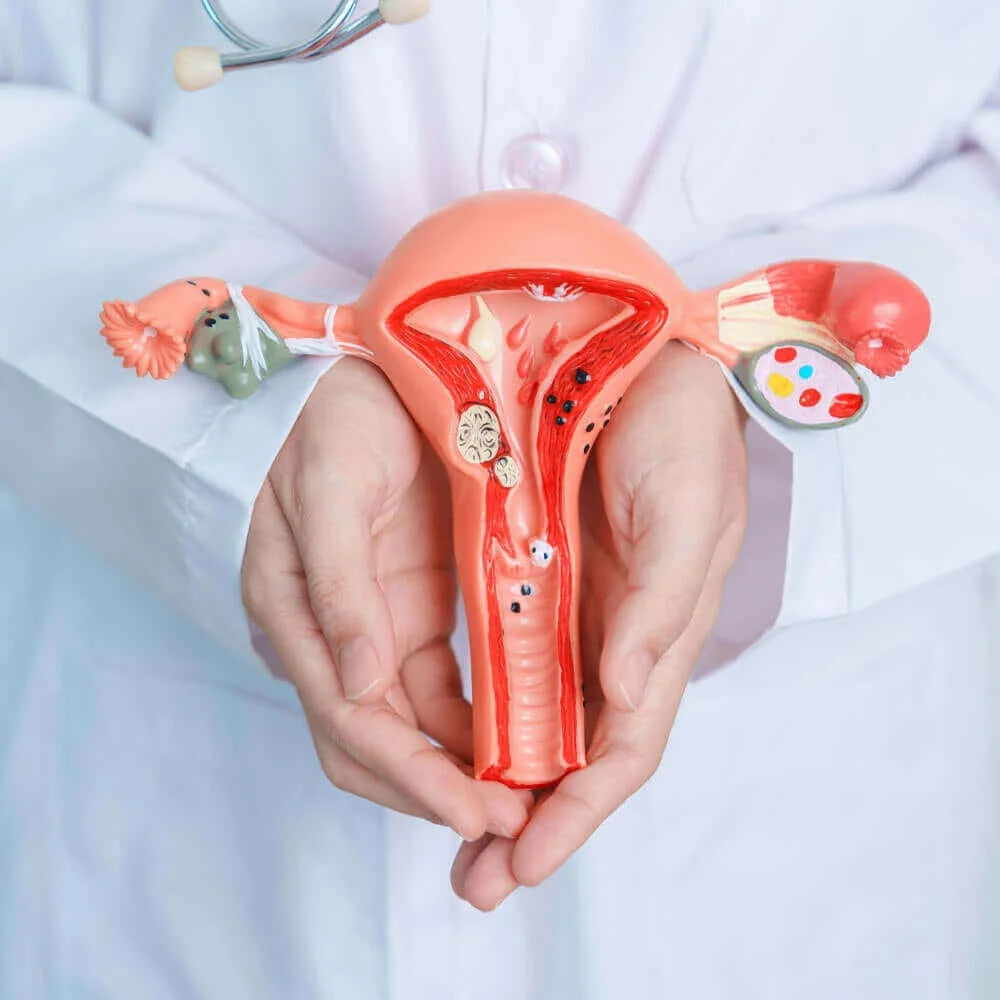
Fibroids are non-cancerous growths in the muscle wall of the womb. They are common in women of reproductive age, and many cause no symptoms at all. A fibroid that causes no trouble usually needs only watching.
When fibroids do cause symptoms, the usual ones are heavy or long periods, which can lead to anaemia, pelvic pain or a feeling of pressure, backache, needing to pass urine often, and constipation. Large fibroids can make the lower abdomen look swollen.
Treatment is considered when symptoms affect daily life, work or health. The options include medicines to reduce bleeding, hormonal treatment, surgery to remove only the fibroids (myomectomy), removal of the womb (hysterectomy), and UFE.
What is UFE, and how is it done?
UFE cuts off the blood supply to the fibroids so that they shrink over time. An interventional radiologist passes a thin tube, called a catheter, into an artery, usually at the wrist or groin. Using live imaging, the catheter is guided into the uterine arteries, which supply the womb.
Tiny particles are then released into the small branches feeding the fibroids. They lodge there and block the flow. Normal womb muscle has a wider blood supply and generally copes. The fibroids lose their blood supply and shrink over the following weeks to months.
No cut on the abdomen is needed and the womb stays in place.
Who UFE may suit, and who it may not
UFE may be considered for a woman with symptomatic fibroids who would like to avoid surgery, keep her womb, or who is not well suited to an operation. The gynaecologist and the interventional radiologist decide together.
Future pregnancy is the most important question. Evidence on pregnancy after UFE is more limited than after myomectomy. Pregnancies have occurred after UFE, but its effect on fertility and on pregnancy is less certain. If you hope to have a child, discuss this first with your gynaecologist.
UFE is not done during pregnancy or when there is an active pelvic infection. It is also not suitable if the heavy bleeding has another cause, or if a cancer of the womb is suspected, which is why the cause must be established first.
Why a gynaecological ultrasound comes first
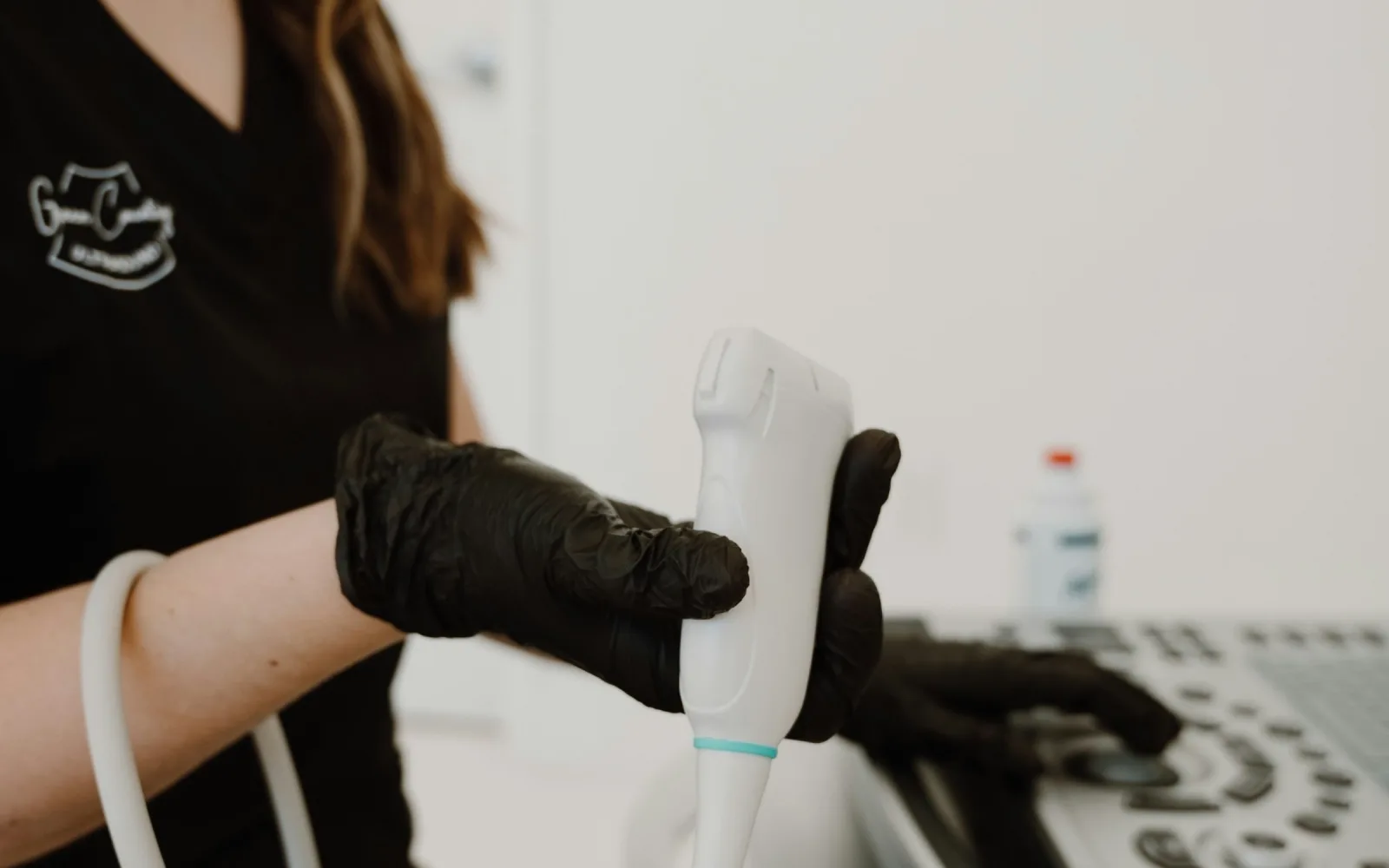
A gynaecological ultrasound shows the number, size and position of fibroids, the thickness of the womb lining and the ovaries. A transvaginal scan, where a small probe is placed in the vagina, gives closer detail. It also helps the doctors judge whether your symptoms are likely to come from fibroids.
Before UFE, most teams also want a detailed MRI of the pelvis to plan the procedure and to check for other conditions. We do not have an MRI scanner. Your gynaecologist or the procedure team advises where to get it done, and we can review the images and reports.
Blood tests, including haemoglobin if periods are heavy, are usually checked too. Sometimes a smear test or a sample from the womb lining is needed as well.
At our centre, the team reviews your referral, scans and reports first. After that review, it confirms whether the procedure is carried out at the centre or elsewhere, and by whom. Suitability is confirmed for each woman.
What to expect, and the risks
The hope is lighter periods and less pressure as the fibroids shrink. This does not happen for everyone, and some women need further treatment later.
Risks to be aware of include:
- Pain afterwards: cramping in the lower abdomen is common in the first day or two and is treated with medicines.
- Post-embolization symptoms: a low fever, tiredness, nausea and a vaginal discharge for days to a couple of weeks.
- Infection of the womb, which is uncommon but serious.
- Fibroid tissue passing through the vagina, which sometimes needs a procedure.
- Effects on periods and the ovaries: periods may change or stop earlier than expected, particularly in older women.
- Hysterectomy: rarely, removal of the womb becomes necessary afterwards because of serious infection or bleeding.
- Dye and puncture site: an allergic reaction to the dye, kidney strain, bruising or artery damage where the catheter went in.
- Radiation: the procedure uses live imaging with a small dose of radiation, so tell the team if you could be pregnant.
Fibroid treatment options side by side
Your gynaecologist can tell you which options fit your symptoms, age and plans. This table is a general guide only.
Medicines
- What it involves
- Tablets or hormonal treatment to reduce bleeding, or to shrink fibroids for a time.
- Womb kept?
- Yes
- If you plan a pregnancy
- Depends on the medicine. Your doctor advises.
Myomectomy
- What it involves
- Surgery to remove only the fibroids.
- Womb kept?
- Yes
- If you plan a pregnancy
- Often chosen when a pregnancy is planned.
UFE
- What it involves
- Blocks the blood supply to the fibroids through an artery.
- Womb kept?
- Yes
- If you plan a pregnancy
- Less is known about pregnancy afterwards. Discuss first.
Hysterectomy
- What it involves
- Surgery to remove the womb.
- Womb kept?
- No
- If you plan a pregnancy
- Pregnancy is not possible afterwards.
From gynaecology review to follow-up
-
1
Gynaecology review and ultrasound
Your gynaecologist examines you and asks for a pelvic ultrasound. Share the report and the images with us.
-
2
Case review
The team reviews the referral, ultrasound, MRI and blood reports and tells you if anything else is needed. It then confirms where the procedure can be carried out, and by whom.
-
3
Planning and consent
The doctor doing the procedure explains how UFE works, the alternatives and the risks. They ask about your pregnancy plans and take your consent.
-
4
The procedure
A catheter is guided through a wrist or groin artery to the uterine arteries, and particles are released. The team tells you what sedation or anaesthesia is planned and how long you are likely to be observed.
-
5
Recovery
Cramping, nausea and a low fever are common for the first days, and medicines are given for them. You receive activity advice in writing.
-
6
Follow-up
A review, and often a repeat scan some months later, shows how the fibroids and your symptoms have changed.
Preparation and aftercare
Before your visit
- Get your pelvic ultrasound report and images, and an MRI if one has been advised.
- Think about whether you want a future pregnancy, and tell your gynaecologist and the procedure team plainly.
- Tell the team if your period is late or you could be pregnant, and about any allergy, kidney problem or diabetes.
- Do not stop prescribed medicines, including any hormonal treatment, unless your doctor tells you to.
- Ask the procedure team about eating and drinking before the day, as fasting rules differ from case to case.
Please bring
- Gynaecologist's referral
- Ultrasound and MRI reports and images
- Recent blood tests such as haemoglobin and kidney function
- List of current medicines
After your visit
- Take the prescribed pain and nausea medicines on time. Do not add other medicines without asking.
- Rest for as long as the team advises, then increase activity gradually.
- Keep the puncture site clean and dry.
- Keep your follow-up visits and the repeat scan. Tell your doctor how your periods change over the next months.
Warning signs after the procedure
Contact the treating team the same day, or go to the nearest hospital emergency department, if you notice any of these.
- A fever that continues beyond the first few days, or that comes with shivering.
- Pain that is severe, or that keeps getting worse despite the prescribed medicines.
- A foul-smelling vaginal discharge, or bleeding that soaks a pad in an hour.
- Passing a lump of tissue from the vagina, especially with pain or heavy bleeding.
- Swelling, pain or redness in one leg, or sudden chest pain or breathlessness.
- Bleeding, swelling or numbness at the puncture site.
- Being unable to pass urine.
Uterine Fibroid Embolization: common questions
Does UFE affect my chances of pregnancy?
It may. Evidence on pregnancy after UFE is more limited than after surgery to remove fibroids, so other options are often considered first for women who plan to conceive. If a pregnancy may be in your future, discuss it with your gynaecologist before deciding.
Do I need UFE or surgery for fibroids?
It depends on your symptoms and plans. UFE and surgery are different options, not better or worse. UFE keeps the womb and avoids an abdominal operation, while surgery removes the fibroids or the womb itself. Age, the size and position of the fibroids and any plan for pregnancy all count.
Do all fibroids need treatment?
No. Fibroids that cause no symptoms are usually only watched, with an occasional scan. Treatment is considered when they cause heavy bleeding, pain, pressure or anaemia.
Can fibroids turn into cancer?
Fibroids are not cancer, and a change to cancer is rare. Doctors still look carefully at any fibroid that grows quickly, especially once periods have stopped for good, because a different growth can look similar on a scan.
Which scan is needed before UFE?
A pelvic ultrasound, often with a transvaginal scan, is the first test. Most teams also want an MRI of the pelvis to plan the procedure. We do ultrasound here but not MRI, so your doctor advises where to have it done.
How long does it take to recover from UFE?
This differs for each woman. The first days usually bring cramping, tiredness and a low fever, and many women need a short break from work. The team doing the procedure gives written advice on activity and on when to return to normal tasks.
Does UFE hurt?
Sedation or anaesthesia, chosen by the team, is used to keep you comfortable during the procedure. The cramping afterwards can be significant in the first day or two, and medicines are given for it. The team explains the plan for pain control beforehand.
Do you perform UFE in Lucknow?
Send your gynaecologist's referral and your scans. The team reviews them and then confirms whether the procedure is carried out at the centre or elsewhere, and by whom. Early steps such as the ultrasound can be done here.
Related services
Tests and care that often go together
Appointments
Ask about Uterine Fibroid Embolization in Gomti Nagar, Lucknow
Send your prescription and any earlier reports on WhatsApp or call the centre. The team reviews them and tells you the next step.
4/12, Vijayant Khand, Gomti Nagar · 0522-3180995
